

ADXL345
PRODUCTION3-Axis, ±2 g/±4 g/±8 g/±16 g Digital Accelerometer
- Part Models
- 5
- 1ku List Price
- Starting From $3.74
Overview
- Ultralow power: as low as 23 μA in measurement mode and 0.1 μA in standby mode at VS = 2.5 V (typical)
- Power consumption scales automatically with bandwidth
- User-selectable resolution
- Fixed 10-bit resolution
- Full resolution, where resolution increases with g range, up to 13-bit resolution at ±16 g (maintaining 4 mg/LSB scale factor in all g ranges)
- Embedded memory management system with FIFO technology minimizes host processor load
- Single tap/double tap detection
- Activity/inactivity monitoring
- Free-fall detection
- Supply voltage range: 2.0 V to 3.6 V
- I/O voltage range: 1.7 V to VS
- SPI (3- and 4-wire) and I2C digital interfaces
- Flexible interrupt modes mappable to either interrupt pin
- Measurement ranges selectable via serial command
- Bandwidth selectable via serial command
- Wide temperature range (−40°C to +85°C)
- 10,000 g shock survival
- Pb free/RoHS compliant
- Small and thin: 3 mm × 5 mm × 1 mm LGA package
ADXL345-EP supports defense and aerospace applications (AQEC standard)
- Download ADXL345-EP data sheet (pdf)
- Extended industrial temperature range: (−55°C to +105°C)
- Controlled manufacturing baseline
- One assembly/test site
- One fabrication site
- Enhanced product change notification
- Qualification data available on request
- V62/12657 DSCC Drawing Number
The ADXL345 is a small, thin, low power, 3-axis accelerometer with high resolution (13-bit) measurement at up to ±16g. Digital output data is formatted as 16-bit twos complement and is accessible through either a SPI (3- or 4-wire) or I2C digital interface.
The ADXL345 is well suited for mobile device applications. It measures the static acceleration of gravity in tilt-sensing applications, as well as dynamic acceleration resulting from motion or shock. Its high resolution (4 mg/LSB) enables measurement of inclination changes less than 1.0°.
Several special sensing functions are provided. Activity and inactivity sensing detect the presence or lack of motion by comparing the acceleration on any axis with user-set thresholds. Tap sensing detects single and double taps in any direction. Free-fall sensing detects if the device is falling. These functions can be mapped individually to either of two interrupt output pins. An integrated memory management system with a 32-level first in, first out (FIFO) buffer can be used to store data to minimize host processor activity and lower overall system power consumption.
Low power modes enable intelligent motion-based power management with threshold sensing and active acceleration measurement at extremely low power dissipation.
The ADXL345 is supplied in a small, thin, 3 mm × 5 mm × 1 mm, 14-lead, plastic package.
- ADXL345-EP Supports defense and aerospace applications (AQEC)
APPLICATIONS
- Handsets
- Medical instrumentation
- Gaming and pointing devices
- Industrial instrumentation
- Personal navigation devices
- Hard disk drive (HDD) protection
Documentation
Data Sheet 3
User Guide 1
Application Note 5
Technical Articles 4
Evaluation Design File 2
Product Information 1
Frequently Asked Question 1
Video 3


Device Drivers 4
3rd Party Solutions 1
Circuit Note 1
Analog Dialogue 4
Rarely Asked Question 1
ADI has always placed the highest emphasis on delivering products that meet the maximum levels of quality and reliability. We achieve this by incorporating quality and reliability checks in every scope of product and process design, and in the manufacturing process as well. "Zero defects" for shipped products is always our goal. View our quality and reliability program and certifications for more information.
| Part Model | Pin/Package Drawing | Documentation | CAD Symbols, Footprints, and 3D Models |
|---|---|---|---|
| ADXL345BCCZ | 14-Lead LGA (5mm x 3mm) | ||
| ADXL345BCCZ-RL | 14-Lead LGA (5mm x 3mm) | ||
| ADXL345BCCZ-RL7 | 14-Lead LGA (5mm x 3mm) | ||
| ADXL345TCCZ-EP | 14-Lead LGA (5mm x 3mm) | ||
| ADXL345TCCZ-EP-RL7 | 14-Lead LGA (5mm x 3mm) |
| Part Models | Product Lifecycle | PCN |
|---|---|---|
|
Dec 6, 2013 - 13_0321 ADXL345, ADXL346, ADXL337 Die Revision |
||
| ADXL345BCCZ | PRODUCTION | |
| ADXL345BCCZ-RL | PRODUCTION | |
| ADXL345BCCZ-RL7 | PRODUCTION | |
|
Oct 17, 2013 - 13_0021 Qualification of Second Source Supplier for Seal Glass on Capped iMEMS Devices |
||
| ADXL345BCCZ | PRODUCTION | |
| ADXL345BCCZ-RL | PRODUCTION | |
| ADXL345BCCZ-RL7 | PRODUCTION | |
| ADXL345TCCZ-EP | PRODUCTION | |
| ADXL345TCCZ-EP-RL7 | PRODUCTION | |
|
May 15, 2012 - 12_0092 Transfer ADXL345 sensor wafer fabrication to the TSMC 8" MEMS only process. |
||
| ADXL345BCCZ | PRODUCTION | |
| ADXL345BCCZ-RL | PRODUCTION | |
| ADXL345BCCZ-RL7 | PRODUCTION | |
|
Jun 21, 2011 - 11_0093 ADXL345 ASIC Alternate Manufacturing Site for Wafer Fab |
||
| ADXL345BCCZ | PRODUCTION | |
| ADXL345BCCZ-RL | PRODUCTION | |
| ADXL345BCCZ-RL7 | PRODUCTION | |
|
Nov 23, 2010 - 10_0327 ADXL345 Die Revision and Datasheet Change |
||
| ADXL345BCCZ | PRODUCTION | |
| ADXL345BCCZ-RL | PRODUCTION | |
| ADXL345BCCZ-RL7 | PRODUCTION | |
|
Apr 5, 2010 - 10_0038 ADXL345 Die Revision and Data Sheet Specification Change |
||
| ADXL345BCCZ | PRODUCTION | |
| ADXL345BCCZ-RL | PRODUCTION | |
| ADXL345BCCZ-RL7 | PRODUCTION | |
|
Mar 19, 2009 - 08_0150 ADXL335 and ADXL345 family of parts, Capping Process Transfer |
||
| ADXL345BCCZ | PRODUCTION | |
| ADXL345BCCZ-RL | PRODUCTION | |
| ADXL345BCCZ-RL7 | PRODUCTION | |
|
Mar 19, 2009 - 09_0037 ADXL335 and ADXL345 Sensor Release Process Transfer |
||
| ADXL345BCCZ | PRODUCTION | |
| ADXL345BCCZ-RL | PRODUCTION | |
| ADXL345BCCZ-RL7 | PRODUCTION | |
|
Apr 21, 2023 - 23_0054 Qualification of Alternate Wafer Fab Site for MEMS Products - ADXL345-EP, ADXL350, ADXL375 |
||
| ADXL345TCCZ-EP | PRODUCTION | |
| ADXL345TCCZ-EP-RL7 | PRODUCTION | |
|
Apr 11, 2014 - 13_0321 ADXL345, ADXL346, ADXL337 Die Revision |
||
| ADXL345TCCZ-EP | PRODUCTION | |
| ADXL345TCCZ-EP-RL7 | PRODUCTION | |
This is the most up-to-date revision of the Data Sheet.
Software Resources
Device Drivers 4
FPGA/HDL 1
Evaluation Software 0
Can't find the software or driver you need?
Tools & Simulations
ADXL345/6 Accelerometer FIFO Over-sampling Calculator
Open Tool
IBIS Model 1
Evaluation Kits
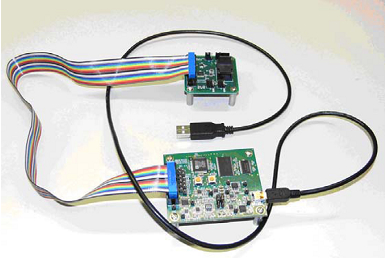
ADXL345-ISEB Evaluation Board
ADXL345-ISEB Evaluation Board
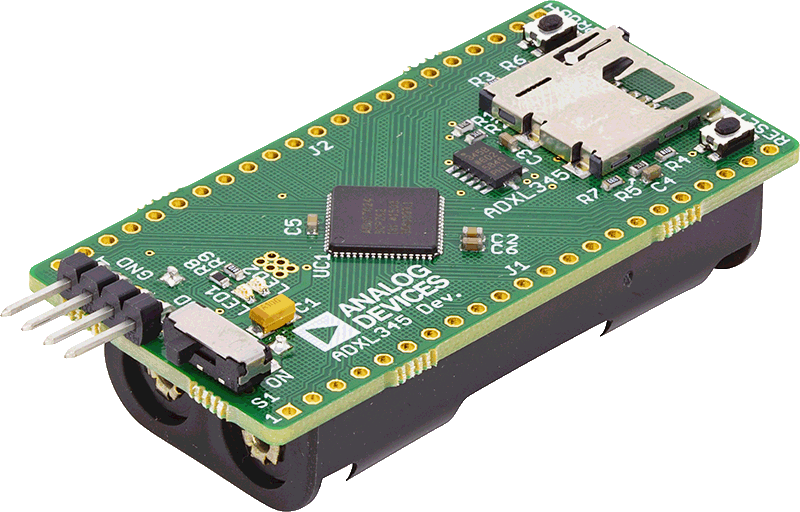
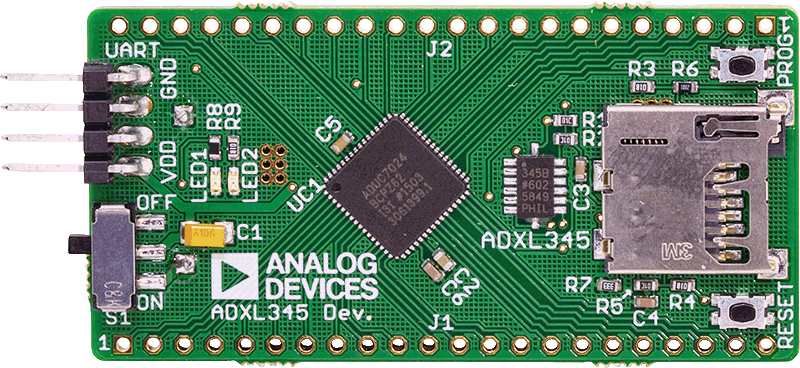
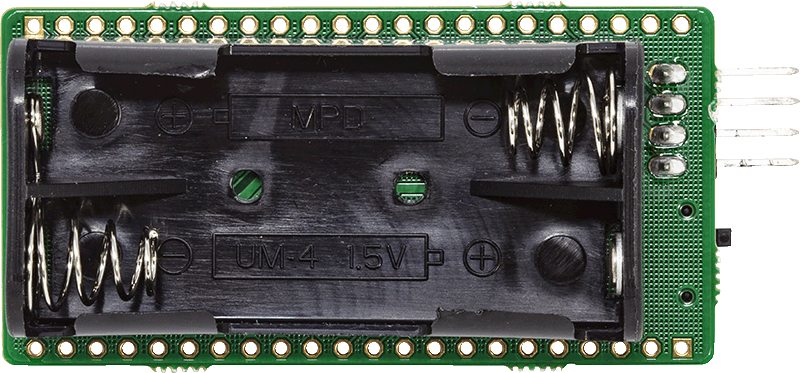
ADXL345 Datalogger / Development Board
Resources
Software
ADXL345 Datalogger / Development Board
Resources
Software
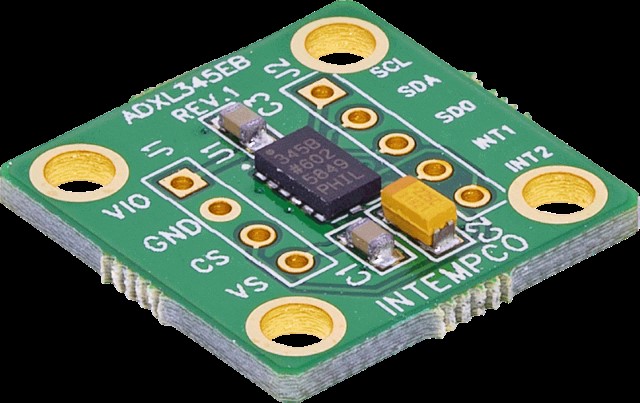
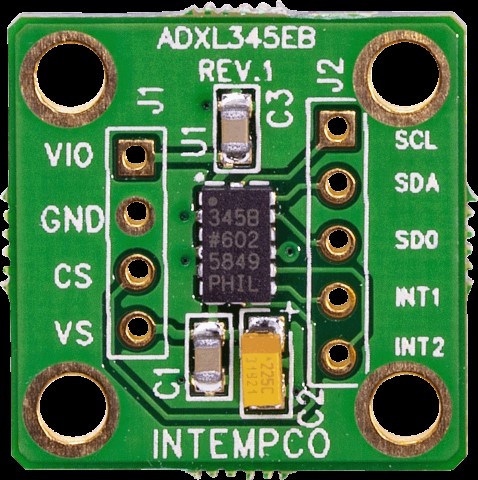
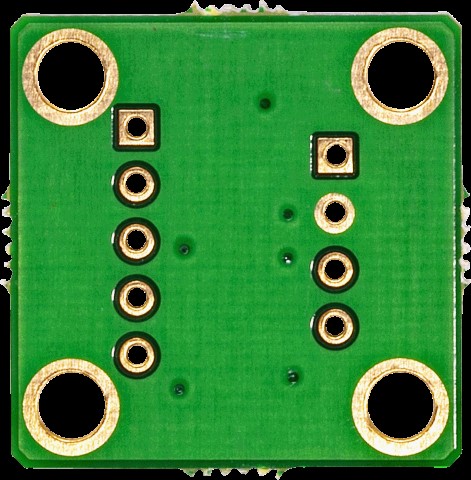
ADXL345 Breakout Board
Resources
ADXL345 Breakout Board
Resources
Real Time Eval System for Digital Output Sensor
Resources
Software
Real Time Eval System for Digital Output Sensor
Resources
Software
Reference Designs

Sensing Low-g Acceleration Using the ADXL345 Digital Accelerometer Connected to the ADuC7024 Precision Analog Microcontroller
Part Used
Resources


