Using the power of innovation to impact the world around us


Signals+ ニュースレター登録
Signals+はコネクティビティ、デジタルヘルス、モビリティ、スマートインダストリーに関する最新情報をお届けします。
ありがとうございます。ご登録のメールアドレスにお送りしたメールを確認し、ニュースレター登録を完了させてください。
世界中の人々の生活に影響を与える、画期的なテクノロジーに関する最新情報をタイムリーにお届けします。
閉じるロボットの自律的な移動を可能にする
主なポイント
|
現在、産業用のロボットは物品の製造/移動/管理の方法を新たに作り替える役割を果たしています。ロボットに関するイノベーションとトランスフォーメーションの過程は4期に分けて説明することができます。その第1期には、精度と再現性を重視した固定マウント型のロボットが使われるようになりました。続く第2期には、モビリティ(移動性)が導入されました。当初はプログラムに従って動作していただけでしたが、その後、自律性が盛り込まれるようになりました。第3期になると、多軸ロボットと自律移動ロボットを組み合わせたモバイル・マニピュレータ(MoMa:Mobile Manipulator)が生み出されました。そして、現在は第4期の真っ只中にあります。まだ発展途上の段階にあるわけですが、人間に似た特徴と能力を備える完全自律型のロボットが登場しつつあります。第1期から第4期までの各段階で、ロボットは根本的なレベルの飛躍を遂げ、機械で出来ることを増やしました。そうした目覚ましい発展は、ロボットが私たちの世界を今後どのように深いところから形作るのかを示唆しています。
固定マウント型のロボットによるオートメーションの時代

20世紀半ばには、固定マウント型のロボット・アームが実用化されました。それらによって、溶接や組み立てといった高い精度が求められる反復的な作業が自動化されたのです。結果として、製造ラインには変革がもたらされました。それらのロボット・アームを制御する役割を担っていたのはPLC(Programmable Logic Controller)です。また、ロボット・アームの多くは、安全柵で囲まれた状態で稼働していました。ロボット・アームは、速度、一貫性、効率の面で優れた性能を発揮しました。当時のロボット・アームは、1つの場所に固定され、事前にプログラムされた動作しかできず、狭い視野の外側の状況は認識できませんでした。それでも、今日の経済を支えるオートメーション技術の基盤は、ロボット・アームによって築かれたのです。
自由への転換 - モビリティへの移行

上述したように、進化の過程の第2期には、自動運転ロボットが誕生しました。つまり、モビリティが実現されたということです。1970年代から1980年代にかけて、テープ、ワイヤ、ストリップなどで設定された固定の経路を走行する誘導車両(GV:Guided Vehicle)が使われるようになりました。ただ、誘導車両は障害に弱く、拡張性にも欠けていました。追加のコストをかけて改造しても経路が固定されていたため、誘導車両は総じて柔軟性に欠けるものだったと言えるでしょう。次に登場したのが、無人搬送車(AGV:Automated Guided Vehicle)です。センサーが活用されるようになった結果、レールやテープは不要になりました。ただ、無人搬送車も事前に定義された経路しか走行できませんでした。それでも、柔軟性とプログラミング性は各段に向上したと言えます。
自律型モビリティの台頭
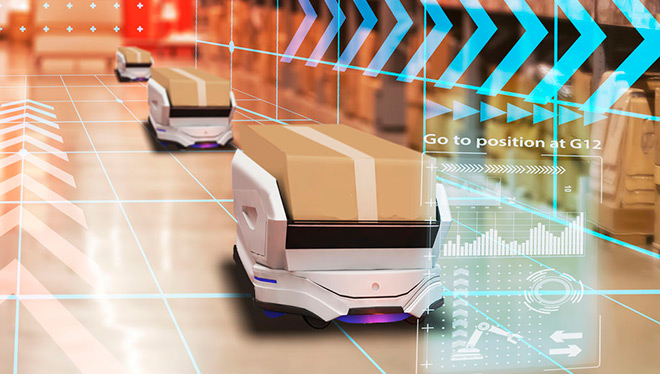
自律移動ロボットは、産業用オートメーションの分野に大きな進化をもたらしました。その特徴は、静的な効率と動的な適応性の間のギャップを埋められる点にあります。自律移動ロボットを利用すれば、人間が介入しなくてもタスクを実行できます。
センサー、AI、コンピュータが進化したことにより、自律移動ロボットは固定された経路から解放されました。自律移動ロボットでは、リアルタイム対応の知覚機能と適応型のナビゲーション機能を利用します。自律移動ロボットの特徴の1つは、無人搬送車を使用する場合と比べて設置に伴うコストを抑えられることです。しかも、自律移動ロボットは柔軟性に優れており、複雑で動的な環境でも移動できます。その機能は、いくつかの高度な技術によって支えられています。信頼性が高く、レイテンシの小さいEthernet/GMSL™(ギガビット・マルチメディア・シリアル・リンク)による接続はその一例です。また、深度検出/LIDAR(光による検知と測距)、SLAM(Simultaneous Localization and Mapping)といった技術も活用されています。現在、アナログ・デバイセズは、オートメーション・システムの分野で世界を牽引するTeradyne Roboticsと提携し、自律動作の進化に取り組んでいます。
自律型のロボットは、動くだけでなく思考する!
無人搬送車とは異なり、自律移動ロボットは状況の変化を認識する能力を備えています。進化したセンサーと高度な処理能力によって、優れた適応性が得られるようになりました。その結果、人間に近い動作が可能になりました。自律的に障害物を検知し、動的に経路を変更し、運用上のニーズに応じてタスクの優先順位を決定できるようになったのです。それにより、効率、汎用性、性能、信頼性が向上します。
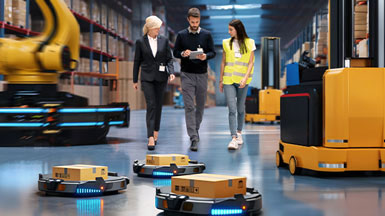
自律移動ロボットは様々な業界に変革をもたらしています。例えば、自律移動ロボットにより、人が監視することなく在庫の補充や受注の処理といった倉庫の業務を効率的に行えるようになりました。また、工場の現場ではジャストインタイム生産が可能になりました。加えて、病院では感染症の患者のケアを支援しつつ、院内で物品を安全に搬送できるようになっています。更に、化学物質の流出や山火事の発生といった大きなリスクを抱える環境においても、自律移動ロボットであれば人間が立ち入れない場所まで踏み込むことが可能です。そして必要なデータを収集し、事業の継続に貢献します。
自律移動ロボットは、従来のオートメーション技術では対応できなかった動的な環境でも優れた性能を発揮します。つまり、ブラウンフィールドや頻繁な再構成が必要な環境においても革新的なレベルの能力が得られます。自律移動ロボットの特徴の1つは、人間の安全を確保した状態で空間を共有できる点にあります。自律移動ロボットは、物流センター、フルフィルメント・センター、研究施設など、あらゆる場所で新たな可能性を切り開いていくでしょう。
オートメーションとロボットの市場のトレンド2030年のモバイル・ロボットの出荷台数は100万台に達する見込み1 モバイル・ロボットの導入台数は、2030年末までに420万台を超えると予想されています。2030年だけで、(Amazonを除いても)約100万台が追加される見込みです1。 モバイル・ロボットに対する需要が増えている最大の要因は、依然として労働力の不足です1。 McKinsey & Companyは、2022年に物流/サプライチェーンの企業の幹部65名を対象とした調査を実施しました。その結果、回答者の70%が今後5年の間にオートメーション化に向けて約1億米ドル(約157億円)の投資を計画していることがわかりました。いずれの企業も、作業の速度の向上、プロセスの安定性の確保、労働力への依存度の低減をより重視しています2。 北米において、何らかの形で自動化を導入している倉庫の割合はわずか20%にとどまります3。 北米では、倉庫を対象とするオートメーション市場の80%は開拓されていない状態にあります。今後の数年間で、その市場の年平均成長率(CAGR)は8.3%に達すると予想されています3。 |
自律型ロボットが抱える課題
モバイル・ロボットの自律的な動作については飛躍的な進化が見られます。しかし、依然として大きな課題が残っていることも事実です。人や様々な物が混在する環境で稼働するロボットには、高度な知覚/推論の機能が必要になります。そのためには、信頼性の高いセンサー、AI、データ処理用のデバイスを組み込まなければなりません。その一方で、バッテリの寿命、ペイロードの容量、相互運用性といった制約が自律型ロボットの普及を阻む要因になっています。これらの課題を克服するには、以下のような領域における大胆なイノベーションと開発の強化が不可欠です。
- モーション: ロボットが複雑な環境下でも常に正確な位置を把握したり、移動したりすることを可能にするには、いくつかの技術が必要になります。例えば、BLDC(ブラシレスDC)モータによるモーション制御、高度なナビゲーション、位置を特定するためのハードウェア、ソフトウェア、AIなどの技術です。また、加速度、方向、角速度を正確に測定するには、角度センサー(エンコーダ)と慣性計測ユニット(IMU:Inertial Measurement Unit)が必要になります。
- 知覚:Time of Flight(ToF)カメラを使用すれば、正確な深度を検出できます。また、人の声/存在/活動を検知するオーディオ・センサーを利用すれば、人とロボットの相互作用や協調動作の改善を図れます。
- 電力:継続的な運用、最小限のダウンタイム、信頼性の高い性能を実現するには、効果的なパワー・マネージメントとバッテリ管理(バッテリ・マネージメント)が不可欠です。例えば、ロボットに、消費電力をリアルタイムに監視する機能を組み込んだとします。そうすれば、そのロボットはタスクを完了した後、充電ステーションに戻るための電力を残しておくことができます。また、移動機能を備えるシャーシとそれに搭載されるアームの間の電力フローも適切に管理しなければなりません。
アナログ・デバイセズは、ロボットのメーカーや産業分野のエンドユーザと連携し、自律移動ロボットの運用に関する課題の解決に取り組んでいます。エンドユーザとの直接的な連携により、アナログ・デバイセズは現状の課題や新たな要件に関する重要な知見を得ることができます。その結果、導入の加速、スケーラビリティの向上、お客様が製品を市場に投入するまでの時間(TTM:Time to Market)の短縮を実現することが可能になります。
アナログ・デバイセズの包括的なエンドtoエンドのソリューションが、自律移動ロボットのTTMとスケーラビリティの改善を加速ロボット市場を牽引する主要企業は、アナログ・デバイセズの中核的な技術を活用しています。それにより、大量生産、効果的にスケーリングされた生産、TTMの短縮を実現しています。アナログ・デバイセズは、ハードウェア、ソフトウェア、AIに関する専門知識を蓄積してきました。それらを活用することにより、スタンドアロンのコンポーネントだけではなく、包括的なエンドtoエンドのソリューションやサブシステムを提供しています。それらを採用すれば、主要な技術領域において目に見える改善が得られます。そうした技術領域の例としては、以下のようなものが挙げられます。
|
モバイル・マニピュレータの普及
先述したように、モバイル・マニピュレータ(MoMa)はイノベーションの第3期に誕生しました。複数の関節を備えるロボット・アームと自律移動ロボットを組み合わせることで実現されています。この新たなモバイル・プラットフォームは、単なる搬送手段ではなく、適応性に優れたインタラクティブなオートメーション用の機器へと進化しました。6自由度に対応するモバイル・マニピュレータを使用すれば、3D空間においてツールの位置/向きを正確に設定できます。そのため、位置、高さ、向きが変化する部品を対象とした確実な操作が行えます。この柔軟性により、固定マウント型のツールに依存する必要がなくなります。また、厳しい許容誤差にも対処することが可能になります。加えて、現場のレイアウトや製品構成の変化に対応できるスケーラブルなオートメーション・システムの導入を迅速に進められます。従来、ワークフローの中には自動化するのは非現実的または非経済的だと考えられているものがありました。モバイル・マニピュレータを採用すれば、そうしたワークフローも自動化できます。

ヒューマノイド・ロボットの実用化

先述したように、現在は進化の過程の第4期に相当します。言い換えると、私たちは自律型ヒューマノイド・ロボットの時代を迎えたことになります。それらのロボットは、二足歩行型、車輪型、あるいは多肢型の形で実現されます。人間と同じ環境で稼働し、器用さと意思決定を必要とするタスクを実行できるように設計されています。つまり、特殊な自動化を担う役割から汎用的な労働を担う役割への移行が進みつつあります。
アナログ・デバイセズは、ヒューマノイド・ロボットを開発する世界中の主要な企業と提携しています。それらの企業に高度な知覚機能を提供すると共に、身体性を備えたフィジカルAIを開発しています。それにより、自動車、産業、医療といった分野で、ヒューマノイド・ロボットと人間がシームレスに連携することが可能になります。また、アナログ・デバイセズは、次世代のヒューマノイド・ロボットの実現に不可欠な要素として、ゼロ・パワーのマルチターン・センサー「ADMT4000」を開発しました。このセンサーを使用すれば、電源が遮断された場合でも回転数を記録できます。この製品はヒューマノイド・ロボットのアクチュエータに最適です。なぜなら、停電やバッテリの交換後に電源を再投入する際のリホーミングが不要になるからです。
移動性と自律性がもたらす未来
ロボットに関する今後の方向性は明白です。自律性を備えるロボットはもはや例外的な存在ではありません。そうではなく、自律性を備えるのは当たり前のことになるでしょう。自律移動ロボットは、ニッチな製品から、スマートな運用を推進する中核的なコンポーネントへと進化しました。自律移動ロボットの市場は業界で最も急速に成長しており、年間10万台以上が販売されています。より高度なヒューマノイド・ロボットが登場する未来を見据えれば、移動性と自律性が効率的な産業オペレーションの基盤であることは明らかです。それだけでなく、移動性と自律性は、“次に起こること”を支える土台でもあると言えるでしょう。
参考資料
1 Ash Sharma「Mobile Robot Forecast Downgraded as Macro-Economic Factors Continue to Bite(マクロ経済の影響が継続、モバイル・ロボットに関する予測は下方修正)」Interact Analysis、2024年12月
2 「McKinsey Global Industrial Robotics Survey, 65 senior leaders and executives in automotive; food and beverage; life sciences, healthcare, and pharmaceuticals; logistics and fulfillment; and retail and consumer goods sectors(McKinseyによる産業用ロボットに関するグローバルな調査 - 自動車/食品・飲料/ライフサイエンス/ヘルスケア/製薬/物流・フルフィルメント/小売/消費財の分野に携わる65名の上級管理者/経営幹部が対象)」、2022年8月
3 Alberto Oca、Chetan Sampat、Manju Thirtha「Navigating Warehouse Automation Strategy for the Distributor Market(流通市場における倉庫のオートメーション化に向けた戦略の策定)」McKinsey & Company、2024年9月