

LTC1929
PRODUCTION2-Phase, High Efficiency, Synchronous Step-Down Switching Regulators
- Part Models
- 8
- 1ku List Price
- Starting From $7.87
Overview
- 2-Phase Single Output Controller
- Reduces Required Input Capacitance and Power Supply Induced Noise
- Current Mode Control Ensures Current Sharing
- Phase-Lockable Fixed Frequency: 150kHz to 300kHz
- True Remote Sensing Differential Amplifier
- OPTI-LOOP™ Compensation Improves Transient Response
- ±1% Output Voltage Accuracy
- Wide VIN Range: 4V to 36V Operation
- Very Low Dropout Operation: 99% Duty Cycle
- Adjustable Soft-Start Current Ramping
- Internal Current Foldback
- Short-Circuit Shutdown Timer with Defeat Option
- Overvoltage Soft-Latch Eliminates Nuisance Trips
- Available in 28-Lead SSOP Package
The LTC1929/LTC1929-PG are 2-phase, single output, synchronous step-down current mode switching regulator controllers that drive N-channel external power MOSFET stages in a phase-lockable fixed frequency architecture. The 2-phase controllers drive their two output stages out of phase at frequencies up to 300kHz to minimize the RMS ripple currents in both input and output capacitors. The 2-phase technique effectively multiplies the fundamental frequency by two, improving transient response while operating each channel at an optimum frequency for efficiency. Thermal design is also simplified.
An internal differential amplifier provides true remote sensing of the regulated supply’s positive and negative output terminals as required by high current applications.
The RUN/SS pin provides soft-start and a defeatable, timed, latched short-circuit shutdown to shut down both channels. Internal foldback current limit provides protection for the external synchronous MOSFETs in the event of an output fault. OPTI-LOOP compensation allows the transient response to be optimized over a wide range of output capacitance and ESR values.
Applications
- Desktop Computers
- Internet/Network Servers
- Large Memory Arrays
- DC Power Distribution Systems
Documentation
Data Sheet 1
User Guide 1
Design Note 3
ADI has always placed the highest emphasis on delivering products that meet the maximum levels of quality and reliability. We achieve this by incorporating quality and reliability checks in every scope of product and process design, and in the manufacturing process as well. "Zero defects" for shipped products is always our goal. View our quality and reliability program and certifications for more information.
| Part Model | Pin/Package Drawing | Documentation | CAD Symbols, Footprints, and 3D Models |
|---|---|---|---|
| LTC1929CG#PBF | 28-Lead SSOP | ||
| LTC1929CG#TRPBF | 28-Lead SSOP | ||
| LTC1929CG-PG#PBF | 28-Lead SSOP | ||
| LTC1929CG-PG#TRPBF | 28-Lead SSOP | ||
| LTC1929IG#PBF | 28-Lead SSOP | ||
| LTC1929IG#TRPBF | 28-Lead SSOP | ||
| LTC1929IG-PG#PBF | 28-Lead SSOP | ||
| LTC1929IG-PG#TRPBF | 28-Lead SSOP |
| Part Models | Product Lifecycle | PCN |
|---|---|---|
|
Aug 6, 2022 - 22_0171 Laser Top Mark Conversion for SSOP Packages Assembled in PNG |
||
| LTC1929CG#PBF | PRODUCTION | |
| LTC1929CG#TRPBF | PRODUCTION | |
| LTC1929CG-PG#PBF | PRODUCTION | |
| LTC1929CG-PG#TRPBF | PRODUCTION | |
| LTC1929IG#PBF | PRODUCTION | |
| LTC1929IG#TRPBF | PRODUCTION | |
| LTC1929IG-PG#PBF | PRODUCTION | |
| LTC1929IG-PG#TRPBF | PRODUCTION | |
This is the most up-to-date revision of the Data Sheet.
Software Resources
Can't find the software or driver you need?
Request a Driver/SoftwareHardware Ecosystem
| Parts | Product Life Cycle | Description |
|---|---|---|
| Power System Management (PSM) & Sequencers 1 | ||
| LTC2974 | RECOMMENDED FOR NEW DESIGNS | 4-Channel PMBus Power System Manager Featuring Accurate Output Current Measurement |
Tools & Simulations
LTspice
Models for the following parts are available in LTspice:
- LTC1929
- LTC1929-PG
LTspice® is a powerful, fast and free simulation software, schematic capture and waveform viewer with enhancements and models for improving the simulation of analog circuits.
Evaluation Kits
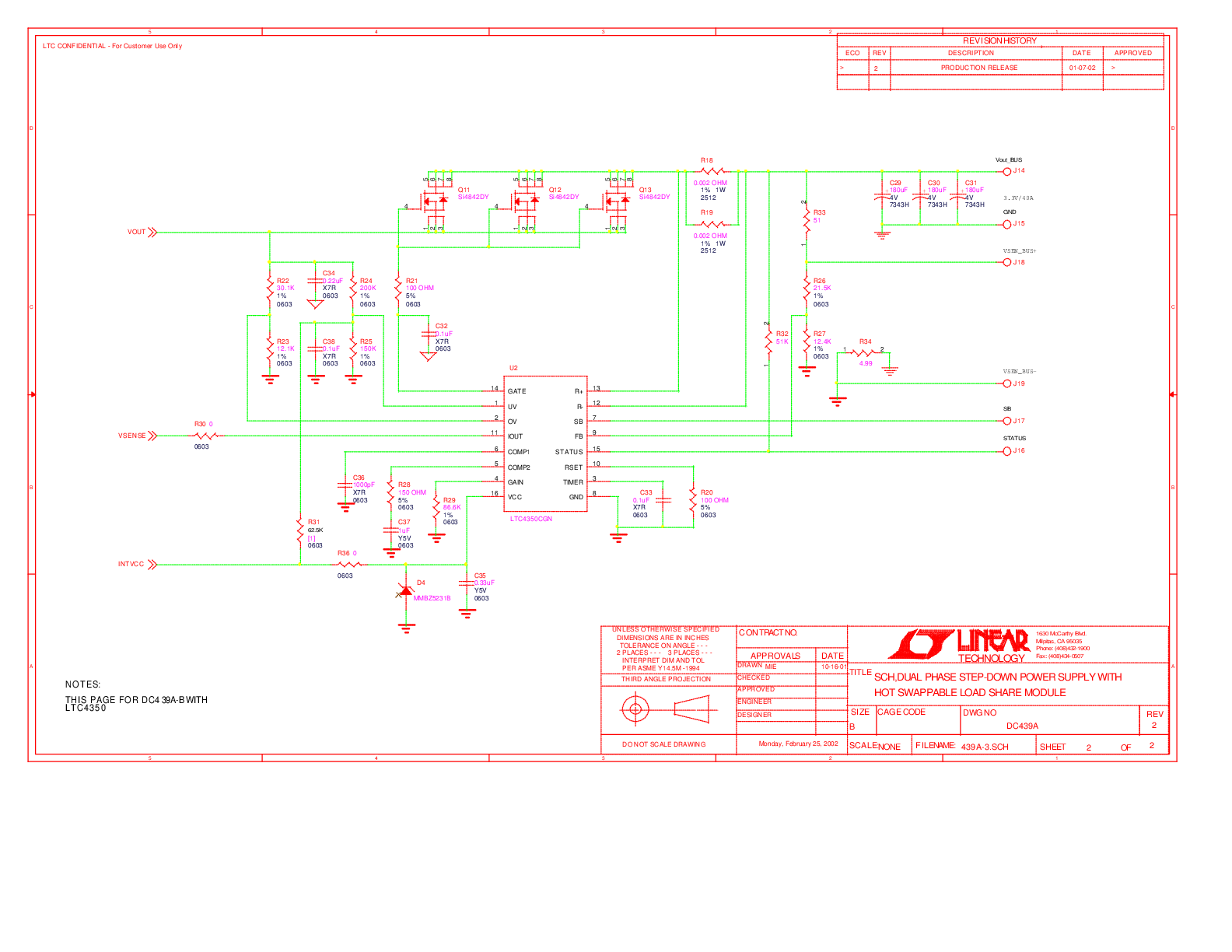
LTC1929CG-PG | Dual Phase, Step-Down Supply with Hot Swappable Load Share Module, 5V to 14V Input, 3.3VOUT @ 40A
Resources
LTC1929CG-PG | Dual Phase, Step-Down Supply with Hot Swappable Load Share Module, 5V to 14V Input, 3.3VOUT @ 40A
Resources
LTC1929CG-PG LTC4350GN | Dual Phase, Step-Down Supply with Hot Swappable Load Share Module, 5V to 14V Input, 3.3VOUT @ 40A
Resources
LTC1929CG-PG LTC4350GN | Dual Phase, Step-Down Supply with Hot Swappable Load Share Module, 5V to 14V Input, 3.3VOUT @ 40A
Resources
Latest Discussions
No discussions on LTC1929 yet. Have something to say?
Start a Discussion on EngineerZone®