

MAX77816
PRODUCTIONHigh-Efficiency Buck-Boost Regulator with 5A Switches
98% Efficiency Buck Boost with I2C Interface Delivering >3A of Continuous Output Current
- Part Models
- 8
- 1ku List Price
- Starting From $1.75
Overview
- Buck and Boost Operation Including Seamless Transition between Buck and Boost Modes
- 2.3V to 5.5V VIN Range
- 2.60V to 5.14V VOUT with 20mV Step
- 3A Minimum Continuous Output Current (VINBB ≥ 3.0V, VOUTBB = 3.3V)
- Burst Current: 3.6A Minimum Output Current for 800μs (VINBB ≥ 3.0V, VOUTBB = 3.3V)
- I2C Serial Interface Allows Dynamic VOUT Adjustment and Provides Design Flexibility
- 97.5% Peak Efficiency
- 40µA Quiescent Current
- Safety Features Enhance Device and System Reliability
- Soft-Start
- True Shutdown™
- Thermal Shutdown and Short-Circuit Protection
- Multifunction GPIO Pin
- MAX77816A/F: FPWM Mode Enable
- MAX77816B: Inductor Peak Current-Limit selection
- MAX77816C: Output Voltage Selection
- MAX77816D: Power-OK indicator
- MAX77816E: Interrupt Indicator
- Small Size: 1.827mm × 2.127mm, 20-Bump WLP, 0.4mm Pitch
The MAX77816 is a high-current, high-efficiency buck-boost regulator targeting single-cell Li-ion battery-powered applications. It supports a wide output voltage range from 2.60V to 5.14V. The IC allows 5A (TYP) maximum switch current. In buck mode, the output current can go as high as 4A, and in boost mode, the maximum output current can be 3A. A unique control algorithm allows high efficiency, outstanding line/load transient response, and seamless transition between buck and boost modes.
The IC features I2C-compatible serial interface. The I2C interface allows the output voltage to be dynamically adjusted thus enabling finer control of system power consumption. The I2C interface also provides features such as enable control and device status monitoring.
The multifunction GPIO pin is register settable to 5 different options such as FPWM mode enable and inductor peak current level selection. These options provide design flexibility that allows the IC to cover a wide range of applications and use cases.
Design Solution: Boost the Run-Time of Portable Electronics with a One-Two Punch ›

Applications
- Battery-Powered Applications
- RF Power Amplifiers
- Smartphones and Tablets
- Wearable Devices
- Wireless Communication Devices
Documentation
Data Sheet 1
Design Note 1
Video 1

ADI has always placed the highest emphasis on delivering products that meet the maximum levels of quality and reliability. We achieve this by incorporating quality and reliability checks in every scope of product and process design, and in the manufacturing process as well. "Zero defects" for shipped products is always our goal. View our quality and reliability program and certifications for more information.
| Part Model | Pin/Package Drawing | Documentation | CAD Symbols, Footprints, and 3D Models |
|---|---|---|---|
| MAX77816AEWP+ | Wafer-Level Package 5x4 Bump, Full Array | ||
| MAX77816AEWP+T | Wafer-Level Package 5x4 Bump, Full Array | ||
| MAX77816BEWP+ | Wafer-Level Package 5x4 Bump, Full Array | ||
| MAX77816BEWP+T | Wafer-Level Package 5x4 Bump, Full Array | ||
| MAX77816CEWP+ | Wafer-Level Package 5x4 Bump, Full Array | ||
| MAX77816CEWP+T | Wafer-Level Package 5x4 Bump, Full Array | ||
| MAX77816DEWP+ | Wafer-Level Package 5x4 Bump, Full Array | ||
| MAX77816DEWP+T | Wafer-Level Package 5x4 Bump, Full Array |
This is the most up-to-date revision of the Data Sheet.
Software Resources
Can't find the software or driver you need?
Request a Driver/SoftwareHardware Ecosystem
| Parts | Product Life Cycle | Description |
|---|---|---|
| Switching Regulators & Controllers 3 | ||
| MAX77801 | RECOMMENDED FOR NEW DESIGNS | 5.5V Input, 2A, High-Efficiency Buck-Boost Converter |
| MAX77813 | PRODUCTION | 5.5V Input, 2A, High-Efficiency Buck-Boost Converter |
| MAX8625 | PRODUCTION | High-Efficiency, Seamless Transition, Step-Up/Down DC-DC Converter |
Tools & Simulations
Software Development 1
SIMPLIS Models 1
Evaluation Kits
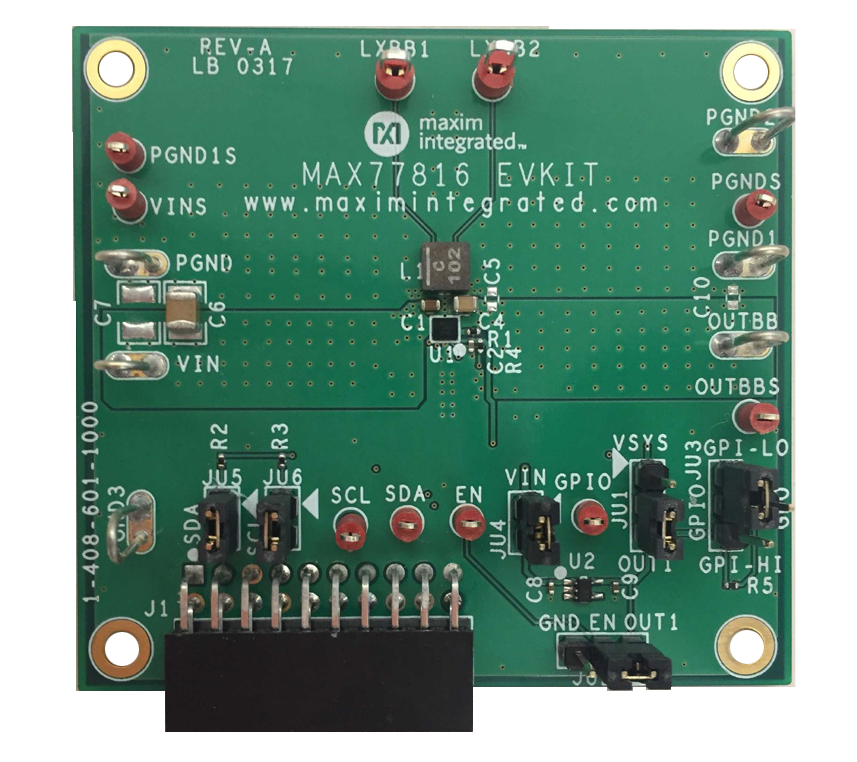
Evaluation Kit for the MAX77816
Resources
Reference Designs
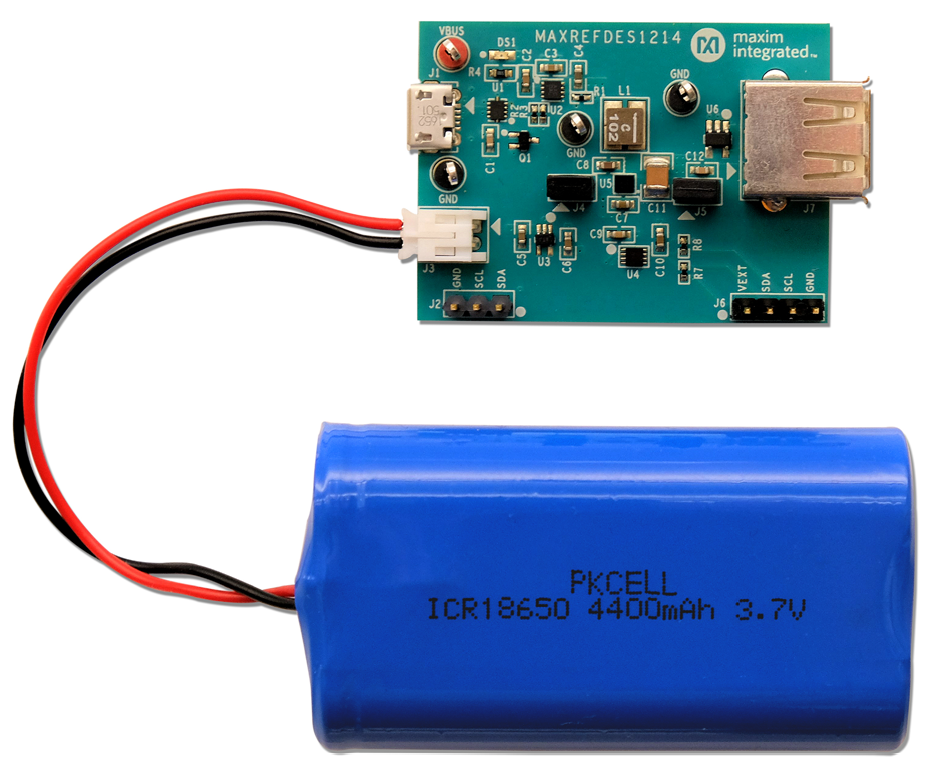
Portable 1.5A USB Charger with Micro-USB Input and USB Standard-A Output
Part Used
Design & Integration Tools
Latest Discussions
No discussions on MAX77816 yet. Have something to say?
Start a Discussion on EngineerZone®