signals header
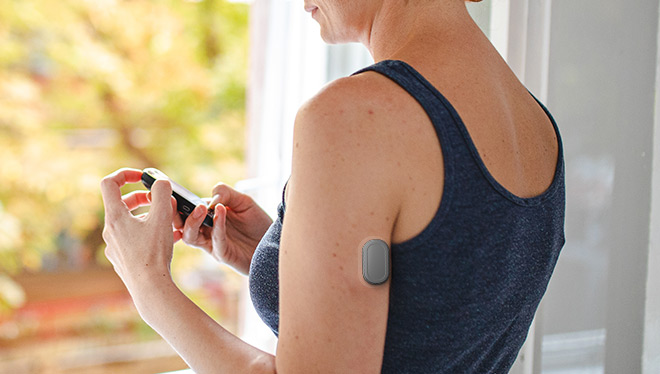
Diabetic cyclist with a continuous glucose monitor on her arm drinking water during her bike tour.

SIGNALS+ 在线快讯订阅

持续关注Signals+,了解有关连接、数字健康、电气化和智能工业的最新见解、信息和想法并加以利用。

点击“订阅”,即表示您同意接收来自Analog Devices, Inc.及其子公司的邮件,并同意我们的隐私政策。设置您的隐私.

谢谢您的订阅,请查看您的邮箱确认邮件并完成注册.

您将实时接收突破性技术如何在全球范围内产生深远影响!

关闭
Headshot of Owen Thomas
Owen Thomas ,

Principal Applications Specialist

Analog Devices

作者详情
Owen Thomas
Owen Thomas is a Principal Applications Specialist at Analog Devices with more than 25 years of experience in healthcare, wearable, and sensing technologies. He is passionate about diabetes innovation, digital health, and the growing role of activity tracking in improving health outcomes. A lifelong tennis enthusiast, Owen enjoys both playing and following the sport, as well as working on automotive projects as an avid backyard mechanic.
关闭详情

HOW CONTINUOUS GLUCOSE MONITORS (CGM) USE MOTION INTELLIGENCE FOR ACTIVE DIABETES CARE

August 11, 2026


KEY TAKEAWAYS

  • Accelerometers close the gap. Advanced motion sensing adds real-time context beyond glucose, reducing unnecessary interruptions during activity.
  • From reactive to adaptive. Motion context helps CGMs interpret data in line with how the body actually behaves.
  • Precision without compromise. Activity-aware sensing fits into small, wearable devices without sacrificing accuracy or battery life.
  • Care becomes anticipatory. Combining motion and glucose data enables more personalized, intuitive diabetes management.


When Alexander Zverev won the 2026 French Open men’s championship, he became the first known tennis player with type 1 diabetes (T1D) to win a Grand Slam tennis title. But the impact resonated far and wide beyond the sports world. It underscored the importance of showing the persistent challenge in modern diabetes care: maintaining stable glucose levels during sustained physical activity (Zverev’s match lasted over 4 hours!) remains difficult, even with today’s most advanced tools.

For more than 530 million people worldwide living with diabetes, including millions with T1D who lead highly active lives, that moment highlighted a fundamental tension faced by these patients every day. The fact that the very activity that improves health and brings joy to their lives can also make glucose control the most unpredictable and challenging.

THE CHALLENGE: CGMS MEASURE GLUCOSE, NOT MOTION

Continuous glucose monitors have transformed diabetes care by replacing multiple, daily finger sticks (all T1D patients should be doing four to eight finger sticks per day) with continuous data. But most systems still operate with a fundamental blind spot: they measure glucose, but they do not understand what the wearer is doing.

This gap becomes especially important during exercise. A downward glucose trend might signal a problem, or it might simply reflect a brisk walk, a tennis match, or a bike ride. Without motion context, automated insulin delivery systems and user alerts often default to a conservative response, requiring user intervention to maintain good glucose control. The result can be extra alarms, unnecessary interruptions, and a technology experience that feels reactive rather than supportive.

For device designers, solving that problem is not trivial. CGMs must remain small, discreet, lightweight, and energy efficient enough to last for the full wear period. Any added component has to justify its presence in both size and power budget.

As devices become smaller, more efficient, and more intelligent, accelerometers can help CGMs interpret glucose in the context of everyday movement—not just in isolation.

ULTRA-LOW POWER SENSORS ENABLE MOTION AWARENESS

This is where advanced accelerometers can address the problem. Modern, always-on motion sensors are engineered to operate at sub-microamp power levels, making them well suited for wearables that need to run continuously without compromising battery life.

Just as important, newer accelerometers can do more than detect movement. They can classify activity states, such as sedentary, walking, or active exercise, directly on the device. That means a CGM can gain context without overloading the host processor or increasing system complexity.

In practical terms, motion-aware CGMs can interpret glucose trends with greater nuance. If the system knows the wearer is exercising, it can better distinguish expected exercise-related changes from insulin-driven hypoglycemia. That creates the potential for fewer unnecessary alerts, more confident automation, and a better experience for active users.

HOW ACCELEROMETERS IMPROVE CGMS

Feature Function Benefit
Ultra-low power operation Enables continuous motion sensing across the full CGM wear cycle Preserves battery life and wear duration while adding always-on activity awareness
On-sensor activity classification Distinguishes rest, walking, and exercise states in real time Helps the system interpret glucose trends more accurately during activity
Compact sensor footprint Fits within the tight size and weight limits of wearable devices Maintains comfort, discretion, and continuous wearability
Context-aware data input Adds motion context alongside glucose data Can reduce false alerts and unnecessary interventions
Tap detection Interacts with the CGM without using a smartphone Easily silence alarms and mark events without interacting with a smartphone

THE HUMAN FACTOR MATTERS

Motion sensing also improves the human experience of diabetes technology. Tap-based interactions can let users silence an alert or mark an event more intuitively, reducing reliance on a smartphone. That helps address alarm fatigue, one of the most underappreciated barriers to sustained wearable adoption.

When a CGM responds not just to chemistry but to the way the body is moving, it begins to feel less like a device that interrupts life and more like one that supports it.

FUTURE CGMS: CONTEXT-AWARE SYSTEMS

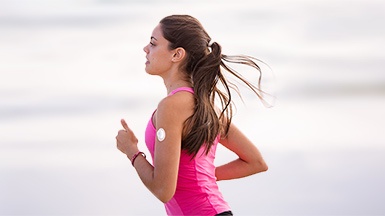
Sweaty person with CGM on arm, tying hair, at sunset.

Continuous glucose monitors have already transformed the way people with T1D manage their condition during exercise, providing real-time glucose insights that help them make more informed decisions about insulin, nutrition, and activity. Even doing minimal exercise like walking the dog[TO5.1] or doing typical household work—not just competing on one of the world's biggest tennis stages—can affect glucose. So having technologies like advanced accelerometers can help people stay active with greater confidence and fewer interruptions.

By pairing glucose sensing with accelerometers and other sensors, today’s systems can provide a richer picture of how movement, stress, and recovery affect the body, helping users anticipate highs and lows and stay focused on performance, not disease management.

But the future of CGMs is about more than chemistry. It’s about context. As devices shrink and automated support expectations grow, motion-aware intelligence will make diabetes technology smarter and more responsive to real life. Next-generation systems may meaningfully reduce the cognitive burden of exercise by recognizing movement and adapting with less friction. The body has always been moving. Future diabetes devices will move with it.