
スナバ回路によって降圧コンバータのリンギングを抑制する方法
主なポイント
|
概要
電源については、小型化、効率の改善、熱性能の向上が強く求められています。これらの課題の解決が重視されるあまり、電源のノイズ対策は設計工程の終盤まで先送りされるケースが少なくありません。結果として、ノイズの問題の解決がより困難になります。早い段階でのノイズ対策としては、Silent Switcher®(サイレント・スイッチャ)技術を適用したレギュレータの採用や基板レイアウトの最適化といった方法が有効です。では、そうした早期の対策を講じられなかった場合、どのようにしてノイズに対処すればよいのでしょうか。そのような場合に役立つのがスナバ回路です。同回路は非常に簡素なものですが、ノイズの低減という目標に対して非常に有効です。
本稿では、まず同期整流方式の降圧レギュレータにおいてリンギングの問題が生じる原因について説明します。このリンギングが、電源のノイズの支配的な要因だと言えます。次に、そのリンギングの抑制に使用するスナバ回路の設計方法と最適化方法について説明します。その一連の流れの中では、「LTspice®」と一般的な寄生成分のモデルを用いたシミュレーションを利用します。それにより、標準的なプリント基板で発生するリンギングについて的確に把握することが可能になります。続いて、スナバ回路の構成要素の値を算出する方法を示します。また、それらの値によって、リンギングの抑制効果がどのように変化するのかを明らかにします。更に、それらの値が降圧レギュレータ全体の効率に及ぼす影響について解説を加えます。
背景
DC/DCコンバータについては、効率の向上に加え、ソリューションの小型化が強く求められています。多くの場合、この課題は、より高いスイッチング周波数を使用することによって解決されます。そうすれば、より小型のインダクタやコンデンサを使用できるようになるからです。但し、高いスイッチング周波数でDC/DCコンバータを動作させる場合、プリント回路基板上の寄生成分の影響が増大するという問題が生じます。ここで言う寄生成分とは、部品やプリント回路基板の配線パターンに起因して形成される容量やインダクタンスのことです。スイッチング速度を高めると、それらの寄生成分との相互作用により、スイッチング(SW)ノードの電圧に大きなオーバーシュートやリンギングが発生します。
SWノードのリンギングは、FET(以下では、基本的にMOSFETを前提として解説を進めます)に対して余計な電圧ストレスを与えます。それだけでなく、電磁干渉(EMI:Electromagnetic Interference)が発生する可能性もあります。EMIは電磁信号によって発生します。その電磁信号は、電磁誘導、静電結合、伝導の形でシステムの性能に悪影響を及ぼします。自動車、医療、テスト/計測などの分野では、厳格なEMIの規格に準拠することが非常に重要になります。製品の認証を得たり、市場投入までの期間を短縮したりするためには、EMI規格への準拠が不可欠であるからです。したがって、電源においてはEMI対策が設計上の重要な課題になります。
寄生成分について理解する
上述したように、降圧コンバータのSWノードには電圧のオーバーシュートとリンギングが生じます。それらは、高速なスイッチング動作と回路内の寄生インダクタンス/寄生容量が相互に作用することによって発生します。それらの寄生成分は、基板上の配線パターンや実装される部品によって形成されます。部品の中では、特にMOSFETが寄生成分を生じさせる主な原因になります。
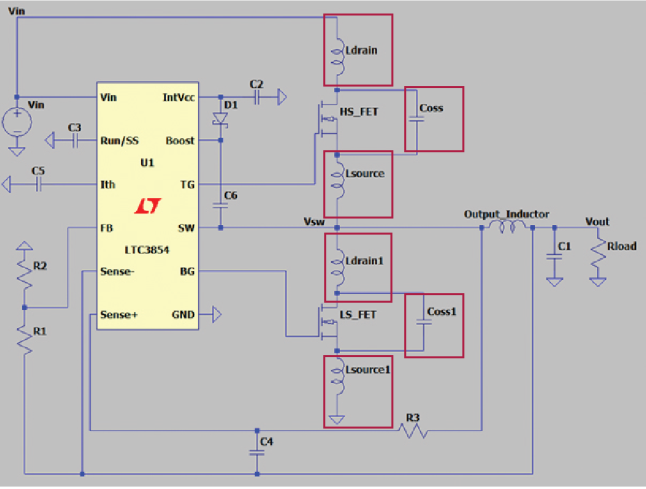
基板上の配線パターンとMOSFETのパッケージに起因する寄生(浮遊)インダクタンスは、MOSFETの寄生出力容量COSSと共にLCタンク回路を形成します。そのため、基板のレイアウトとMOSFETの選択は設計上の重要なポイントです。
寄生インダクタンスの大きさは設計によって異なります。本稿で示すシミュレーションの例では、パワー・ステージ(MOSFET)周辺の寄生インダクタンスを5nHに設定することにします。この値は、検討の出発点として妥当なものだと言えます。基板のレイアウトが適切でない場合、寄生インダクタンスの値は非常に大きくなります。配線パターンについては、25mm(約1インチ)ごとに最大10nHの寄生インダクタンスが形成される可能性があるからです。
図1に、典型的な降圧コンバータの回路例を示しました。この回路は同期整流方式の降圧コントローラ「LTC3854」を使用して構成しています。赤い線で囲んでいる素子は、形成されることが予想される寄生成分に相当します。

スナバ回路の設計、その理論と計算
寄生成分によって生じるノイズについては、スナバ回路を利用することが有効な対処策になります。ここからは、スナバ回路の設計について詳しく解説していきます。
スナバ回路とは何か、どのように機能するのか?
DC/DCコンバータでは、スイッチング動作と寄生成分の相互作用によってノイズが発生します。この過剰なエネルギーを抑制するにはどうすればよいのでしょうか。そのための方法として広く使用されているのがスナバ回路です。通常、同回路は抵抗とコンデンサを直列に接続したRC回路として構成されます。これを使用すれば、SWノードで生じる電圧のスパイクとリンギングを吸収することができます。
寄生成分によって形成されたLCタンク回路からは、周波数の高いエネルギーが放出されます。スナバ回路は、そのエネルギーを対象とした放出経路として機能します。DC/DCコンバータのパワー・スイッチがオフになると、スナバ回路のコンデンサの充電が始まります。それにより、リンギングの原因になるエネルギーが吸収されます。一方、スナバ回路の抵抗は、コンデンサに蓄積されたエネルギーを熱として放散します。それにより、電圧の振動が効果的に抑制されます。スナバ回路を適用すれば、新たな共振周波数が導入されると共に、回路に抵抗が追加されることになります。それにより、リンギングのピークの電圧と持続時間が低減されます。その結果、パワー・スイッチを過電圧のストレスから保護することが可能になります。
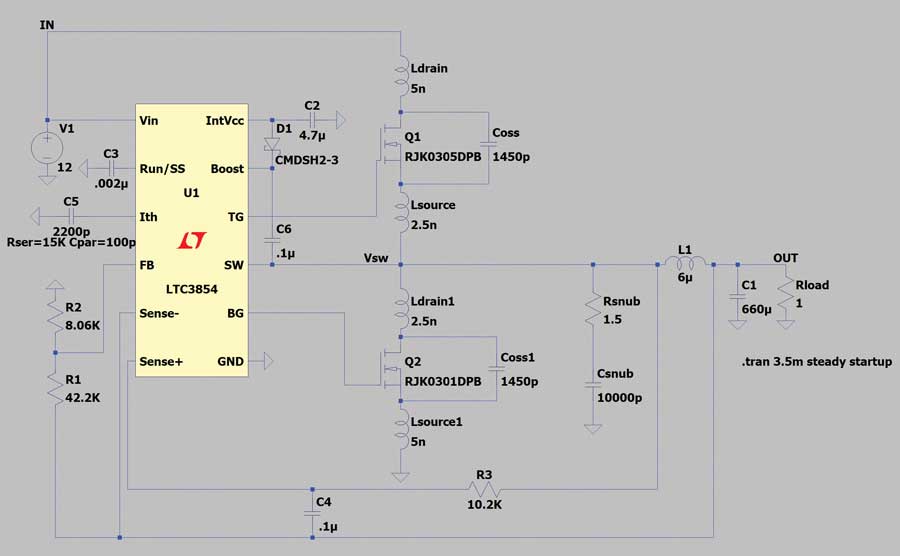
図2に示したのは、図1の降圧コンバータにスナバ回路を適用した例です。スナバ回路は、SWノードとグラウンドの間に配置します。プリント基板上では、できるだけMOSFETに近い位置に実装することが重要です。


スナバ回路に関する計算の手順
スナバ回路を設計する際には、いくつかのパラメータの値を決定する必要があります。以下に示すのは、その初期値(最適化する前の大まかな値)を設定するための手順です。
- まず、SWノードで生じるリンギングの周波数を測定します。ここで言うリンギングの周波数とは、最初のスパイクのピークから2番目のスパイクのピークまでの周波数のことです。本稿では、リンギングの周波数の値をシミュレーションによって取得することにします。後ほど簡単に説明しますが、実際の基板を使用した測定では、オシロスコープの帯域幅の制限をオフにし、グラウンドまでの距離を短くしてリンギングを観測できる状態にしなければなりません。
- SWノードとグラウンドの間にコンデンサを追加し、リンギングの周波数(fr)が上記の測定値の約半分になるようにします。その際には、値の異なるいくつかのコンデンサを用いて繰り返し試行することになります。
- 追加したコンデンサの値を3で割ることにより、寄生容量の値(CP)を決定します。
- 寄生容量の値を決めれば、以下の式によって寄生インダクタンス(LP)の値を計算できます。

続いて、以下の式により特性インピーダンスの値を計算します。

リンギングを減衰させるには、スナバ回路において、式(2)で算出した特性インピーダンスと値がほぼ等しい抵抗(通常は数Ω)を使用します(以下参照)。

ここまでに示した式を使えばCPの値を計算できます。詳細は後述しますが、スナバ回路では、容量値がCPの値の1倍~4倍のコンデンサを使用します。
LTspiceによるシミュレーションと解析
ここまでに、ノイズの発生原理、測定に関する注意点、スナバ回路で使用する抵抗/コンデンサの初期値の計算方法について簡単に説明しました。次のステップでは、シミュレーションを利用してスナバ回路の初期設計を行います。本稿では、LTspiceを用いて、プリント基板の寄生成分の影響でSWノードにリンギング/オーバーシュートが生じる様子を示すことにします。その上で、スナバ回路の有効性を確認します。その解析では、スナバ回路の有無により、降圧コンバータの振る舞いにどのような違いが生じるのかを確認します。
スナバ回路を設計/最適化するために必要な手順を以下に示します。
- 寄生成分のモデリング:まず、寄生成分に対応するモデルを作成し、それらを回路図上に配置します。その上で、スナバ回路を適用しない場合にSWノードに生じるリンギングとオーバーシュートを確認します。
- 初期値を適用したスナバ回路の効果の確認:次に、回路図上のスナバ回路に上述した手順で計算した初期値を適用します。その状態で、降圧コンバータ回路のシミュレーションを実行します。それにより、スナバ回路がもたらすリンギングの低減効果を確認します。
- スナバ回路の最適化:続いて、スナバ回路の部品の値を変更しながらシミュレーションを繰り返し実行します。それを通して、リンギングを抑制しつつ、電力損失を最小化するための最適なバランスを見いだします。
- 効率の解析:最後に、降圧コンバータ全体の効率を確認します。その際には、スナバ回路を使用しない状態と最適化されたスナバ回路を適用した場合の効率を比較します。それにより、スナバ回路の影響を定量化します。
寄生要素のモデリング、リンギングの測定
ここまでに説明したように、プリント基板のレイアウトが不適切である場合、大きな寄生成分が形成されます。その結果、SWノードでリンギングが発生します。同期整流方式の降圧コントローラであるLTC3854を使用して降圧コンバータを構成したとします。恐らく、その降圧コンバータは基板レイアウトの影響を反映したものになります。いわば、その影響を確認するための好材料になるはずです。LTC3854は、外付けのMOSFETと共に使用します。このことから、特にレイアウトの影響が顕著になります。本稿のシミュレーションでは、回路に5nHの寄生インダクタンスを盛り込みます。それにより、不適切なレイアウトの影響をモデル化します。先述したように、基板上の配線パターンについては、25mmごとに10nH以上の寄生インダクタンスが追加される可能性があります。このことから、5nHという値は妥当なものだと言えるでしょう。
スナバ回路で使用する部品の値を計算する前に、リンギングがもたらす影響の大きさについて理解しておくことが重要です。通常、リンギングの評価はオシロスコープでSWノードをモニタすることによって行います。電圧の立ち上がり波形を正確に捕捉するためには、オシロスコープの電圧レンジ(V/div)が全電圧範囲(0V~VIN)に対応するように設定しなければなりません。その上で時間軸を調整し、単一の遷移を観測できるようにします。
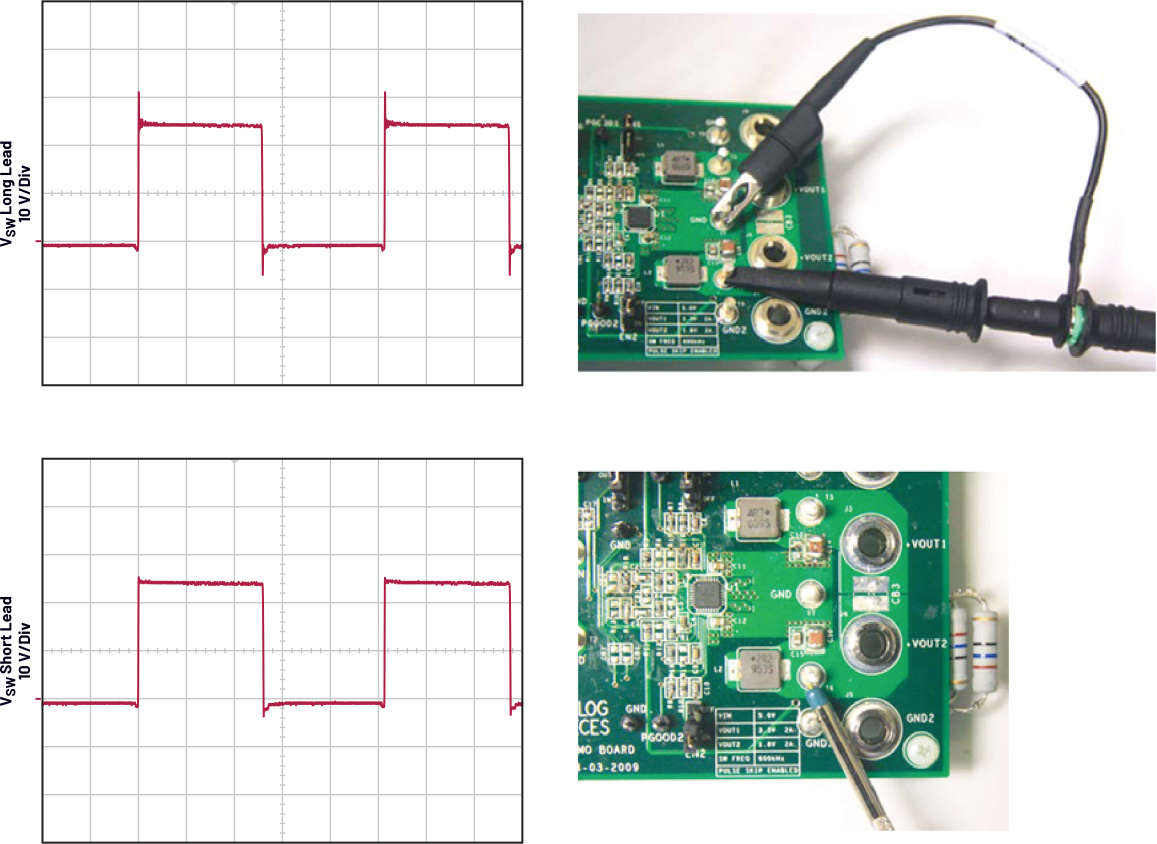
正確な測定を実施するためには、適切なプロービング技術を適用することが不可欠です。例えば、オシロスコープで用いるプローブとして、グラウンド・リードが長すぎるものを使用しているケースをよく見かけます。これはよくある誤りです。長すぎるグラウンド・リードによって、寄生インダクタンスが生じてしまうからです。つまり、測定を実施する際には、そのインダクタンスによって人為的なリンギングが発生することになります。言い換えれば、実際のスイッチング動作が不適切な測定結果によって表現されてしまう可能性があるということです。では、リードのループによるインダクタンスを大幅に低減し、より正確な測定を実施するにはどうすればよいのでしょうか。そのためには、長いリードを短いグラウンド・スプリングに置き換えます。これが非常に重要なポイントです。
図3(上)に、長いグラウンド・リードを使用している様子とその場合の測定結果を示しました。一方、図3(下)には、グラウンド・スプリングを使用して測定を行っている様子とその結果を示しています。両者を見比べれば、測定結果に非常に大きな違いが現れることがわかります。長いグラウンド・リードを使用すると、大きなオーバーシュートとリンギングが人為的に引き起こされてしまいます。つまり、回路の実際の性能を見誤ってしまう可能性があります。この点には十分に注意してください。本稿では、理論とシミュレーションに焦点を絞って解説を進めています。そのため、これ以上、測定手法について詳細に説明することはできません。ただ、これは重要なトピックなので、別の機会に論じたいと考えています。

スナバ回路を使用しない場合のシミュレーション結果
図4に示すのは、シミュレーションの対象とした降圧コンバータの回路です。本来の回路に、様々な寄生成分をモデル化したインダクタとコンデンサを追加しています。図5を見ると、これらの寄生成分がSWノードに及ぼす影響が現れています。ご覧のとおり、寄生成分によって形成されるLCタンク回路は、大きなオーバーシュートとリンギングを引き起こします。


このシミュレーション結果を見ると、ピークの電圧は18Vをわずかに上回っています。これは12Vという想定値を大幅に超えています。このオーバーシュートはMOSFETの絶対最大定格電圧を超える可能性があります。つまり、MOSFETが損傷したり、長期的な信頼性が低下したりするかもしれません。これは大きな懸念事項です。また、リンギングも、MOSFETが明確に定義されたオン/オフの条件で動作していないことを表しています。これも大きな問題です。
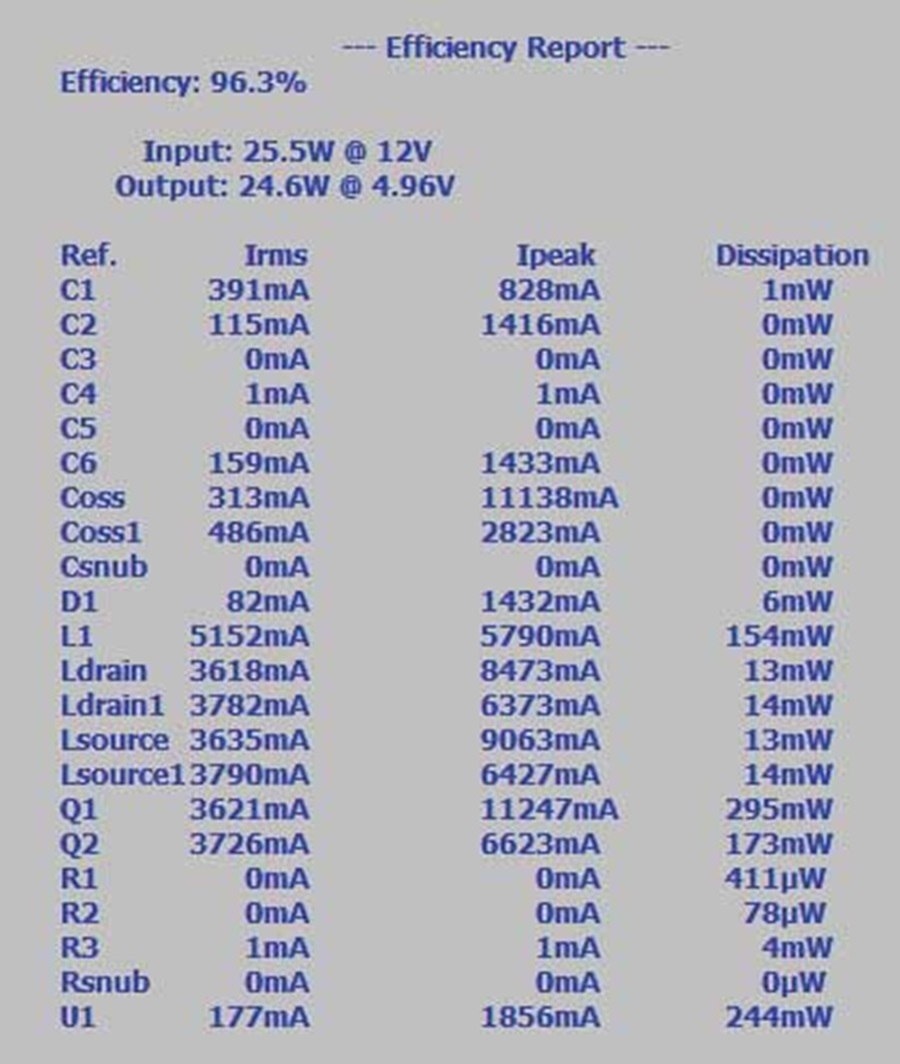
図6を見ると、降圧コンバータ全体の効率は96.3%であることがわかります。つまり、高い効率が得られているわけですが、この値はスナバ回路を適用していない場合の結果です。この点に注意してください。以下では、本稿で例にとっている降圧コンバータでリンギングを軽減するためには、スナバ回路を適用することが不可欠であることを示します。また、スナバ回路を適用すると、図6に示した効率に、わずかではあるものの定量化が可能なレベルの影響が及ぶことも明らかにします。

寄生成分のモデルと最適化前のスナバ回路の影響
ここで図7の回路をご覧ください。これは図4の回路と同様のものですが、SWノードとグラウンドの間に単純なスナバ回路を追加しています。スナバ回路の抵抗とコンデンサには初期値を設定しています。これらは最適化された値ではありません。
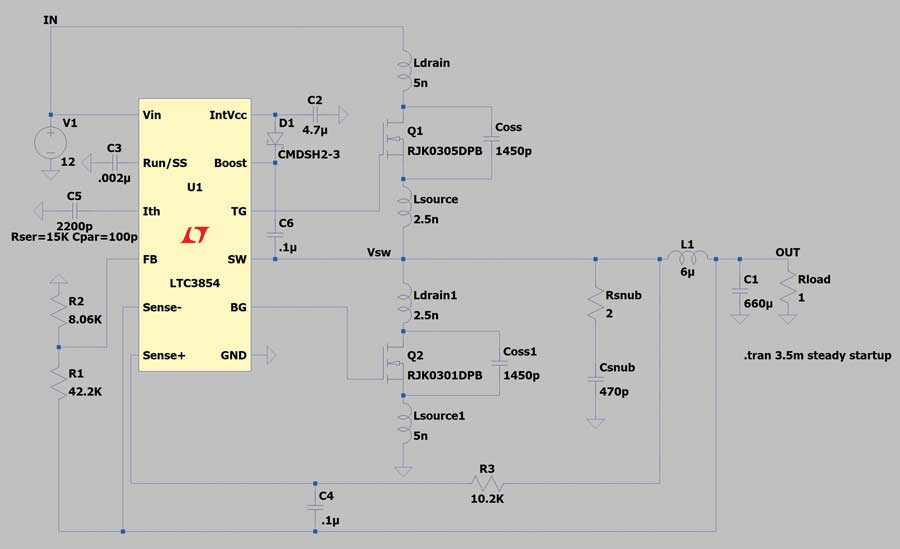

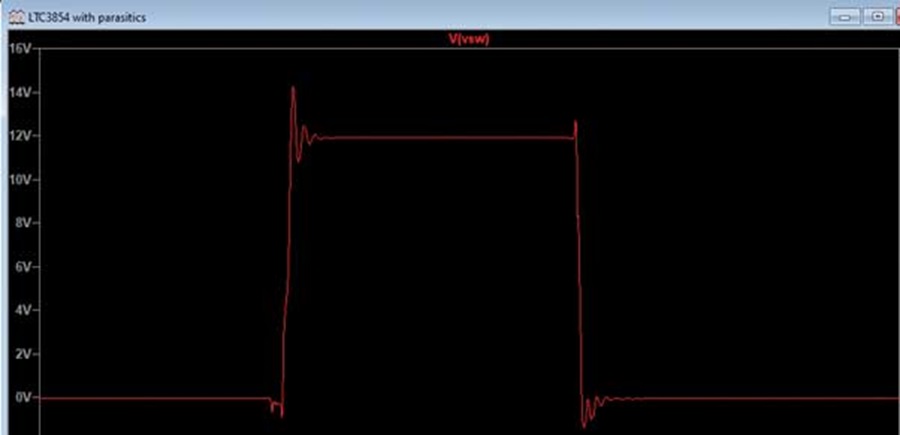
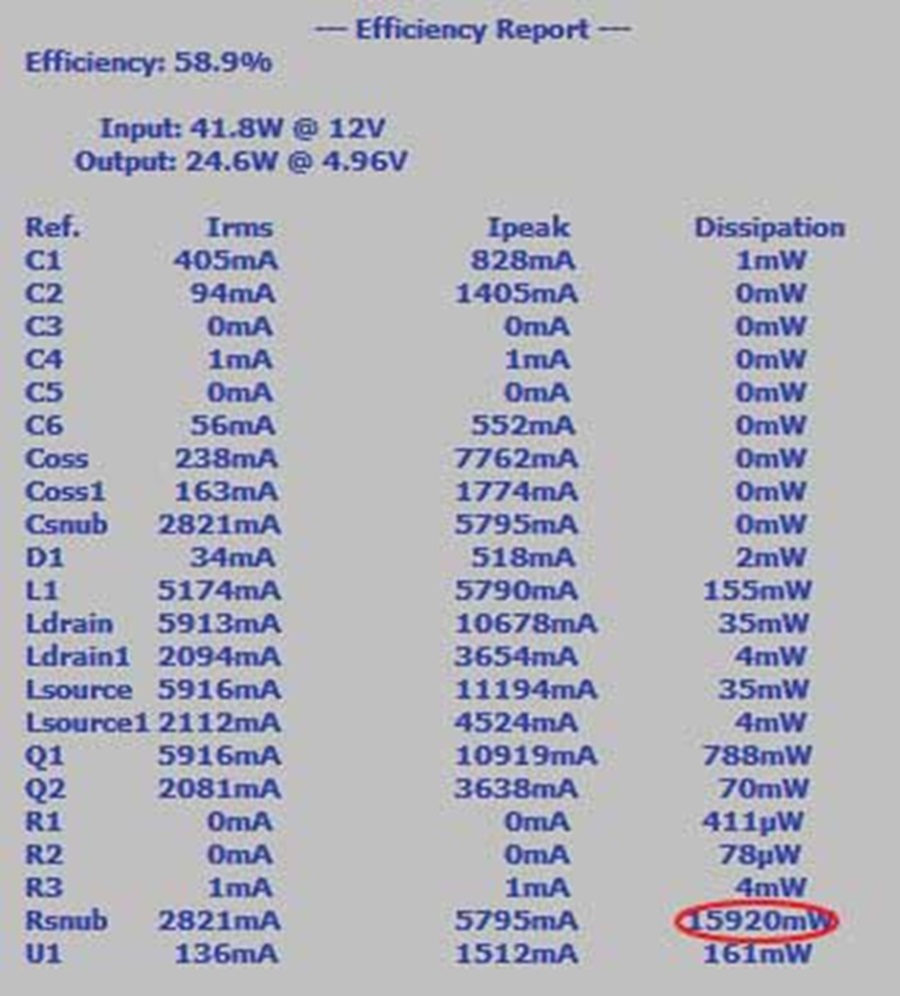
図8に示したのは、図7の回路のシミュレーション結果です。図5と同様にSWノードの電圧の波形を示しています。2つの波形を比較すれば、スナバ回路を適用すると大幅な改善が得られることがわかります。オーバーシュートのピーク値は14Vで、図5の結果と比較して約4V低下しています。また、ターンオン後に現れるリンギングも大幅に低減されています。但し、降圧コンバータ全体としての効率は58.9%まで大幅に低下しました(図9)。損失の大部分はスナバ回路の抵抗によるものです。スナバ回路を適用すれば、リンギングを低減できることは間違いありません。しかし、その回路が最適化されたものでない場合、効率が大幅に低下する可能性があるということです。


スナバ回路の最適化
それでは、先述した手順に従って、スナバ回路で使用する抵抗とコンデンサの値を最適化しましょう。目標は、過度の電力損失が生じないようにしつつ、リンギングを効果的に抑制できるスナバ回路を設計することです。
まず、回路の寄生成分の値を決定します。つまり、寄生インダクタンスと寄生容量の値を算出します。スナバ回路を適用しない状態のシミュレーション結果を見ると、リンギングの周波数は23.41MHzとなっていました。
次に、SWノードとグラウンドの間に配置するコンデンサの値を変更して、リンギングの周波数の変化を観察します。SWノードに14000pFのコンデンサを追加してシミュレーションを実行すると、リンギングの周波数は12MHzに低下しました。ここで、共振周波数を表す式 fo = 1/(2×PI√LC)を使用すれば、寄生容量の値を決定できます。周波数は、総容量が増加することによって変化します。新たな総容量値(Ctotal)は次の式で表されます。
Ctotal = Cparasitic + Cadded
元の周波数(fold)と新たな周波数(fnew)の関係は以下の式で表されます。

Cparasiticの値は、以下のようにして算出できます。

つまり、降圧コンバータの回路には約5000pFの寄生容量が存在することになります。この寄生容量の値を使用すれば、以下のようにして寄生インダクタンスの値を算出できます。

また、回路の特性インピーダンスは次のように計算できます。

スナバ回路の抵抗は、上記の特性インピーダンスよりも大きくなるように設定します。ここでは、標準抵抗としても提供されている1.5Ωの抵抗を使用することにします。
次に、スナバ回路のコンデンサの値(Csnubber)を決定します。通常、その値は寄生容量と同じか、それ以上になるように設定します。上限値は寄生容量の値の4倍までとします。ここでは、十分な量のエネルギーを吸収できるようにするために、寄生容量の2倍の値を使用することにします。つまり、Csnubber = 2×Cparasitic= 2×5000pF = 10000pFのコンデンサを使用します。
以上で、スナバ回路の抵抗値と容量値を最適化することができました。これらの値を使用して、LTspiceによるシミュレーションを実行してみましょう。
図10に示したのがその結果です。1.5Ω+ 10000pFのスナバ回路を使用することにより、意図したとおりリンギングが大幅に抑制されていることがわかります。また、オーバーシュートは18V以上のレベルから17.2Vまで低下しました。まだオーバーシュートは残っていますが、この結果はスナバ回路の設計における本質的なトレードオフを浮き彫りにしています。スナバ回路で使用する抵抗とコンデンサの値を調整すれば、オーバーシュートとリンギングをほぼ完全に除去することも可能でしょう。しかし、その結果として電力損失が増大し、効率が大幅に低下してしまうことになります。
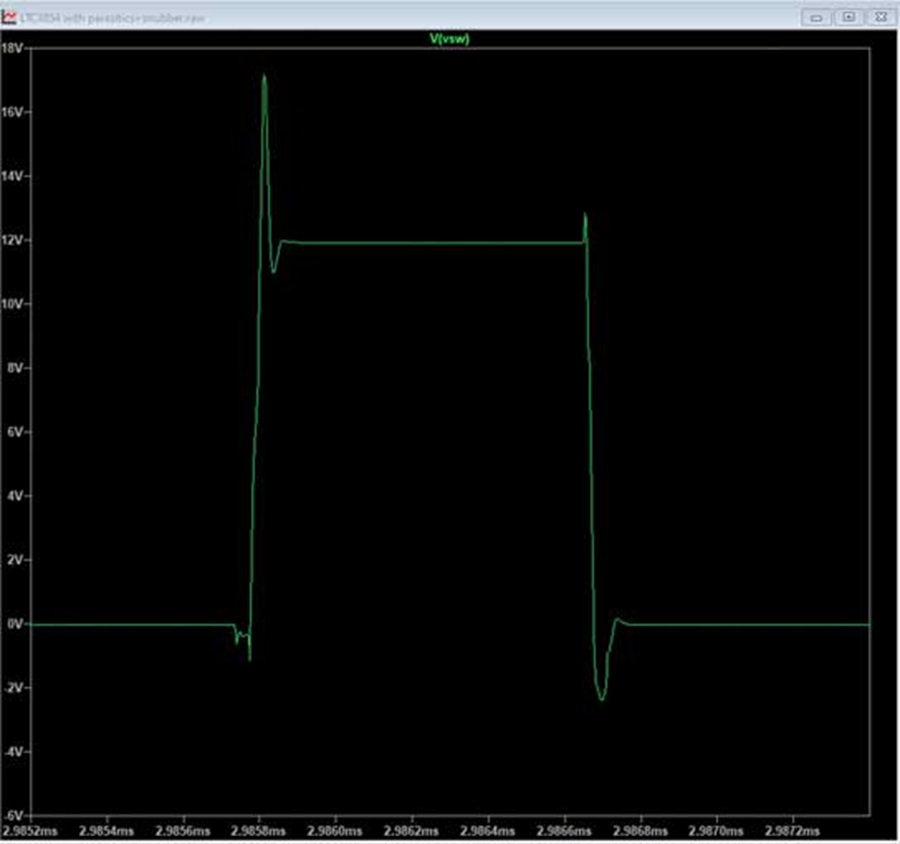

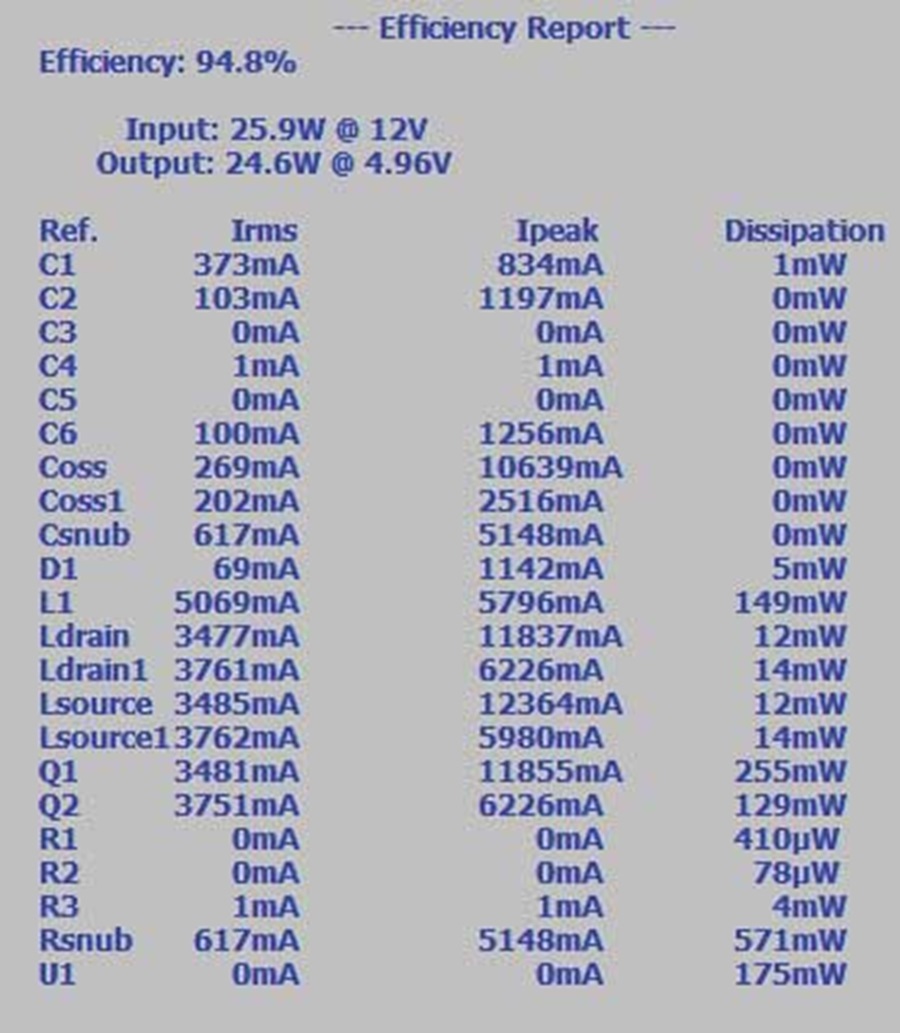
図11に示したように、降圧コンバータ全体の効率は94.8%になりました。スナバ回路を最適化しない場合は58.9%だったので、大幅に改善されていることがわかります。スナバ回路を使用すると、その抵抗が電力を消費します。そのため、常に効率に対して影響が及びます。しかし、寄生成分によるLCタンク回路の存在を前提として部品の値を最適化すれば、効率への影響を最小限に抑えられることがわかります。

まとめ
信頼性の高いDC/DCコンバータを設計するためには、SWノードのリンギングについて理解し、それを抑制する必要があります。本稿で説明したように、この周波数の高いノイズは、回路に固有の欠陥によって発生するわけではありません。そうではなく、プリント基板上の配線パターンや実装された部品によって形成される寄生成分に起因して生じます。具体的には、寄生インダクタンスと寄生容量によって形成されるLCタンク回路が直接的な原因になります。
本稿では、減衰されていない状態のリンギングの周波数とそれに伴う電圧のオーバーシュートを正確にシミュレーションする方法を示しました。この体系的なアプローチを採用することで、リンギングの問題を解析することができます。その結果、最適なスナバ回路を設計することが可能になります。そのスナバ回路のコンデンサは、リンギングのエネルギーを吸収する役割を果たします。また、同回路の抵抗の値は、寄生インピーダンスとマッチングするように設定します。それにより、リンギングを抑制しつつ、エネルギーを熱として放出することが可能になります。
本稿で示したシミュレーション結果から、適切に設計されたスナバ回路は洗練された効果的なソリューションであることが明確になりました。わずかな電力損失が生じるものの、EMI性能とシステムの信頼性の両方を大幅に高められます。このシンプルでありながら強力なRC回路をDC/DCコンバータに組み込むことで、ノイズを大幅に軽減し、脆弱性の問題を解消することができます。いわば、問題のあるDC/DCコンバータの回路をクリーンで信頼性の高い電源に迅速に変換できるということです。それにより、最終製品の寿命を延ばすと共に、規格に準拠することが可能になります。
※初出典 2026年 TECH+(マイナビニュース)
参考資料
Wesley Ballar、Jacob Ciolfi「スイッチング電源の評価に必要な実験スキル【Part 1】 入出力リップルとスイッチング・ノードの電圧を測定する」Analog Dialogue、Vol. 59、2025年1月