
ADM1085

ADM1085
LAST TIME BUYVoltage Sequencer with Active High, Open-Drain Enable Output
- Part Models
- 1
- 1ku List Price
- Starting From $0.59
Viewing:
Overview
- Provide time delays between enabling of regulators
- Can be cascaded with regulators for multiple supply sequencing
- Output stages
High voltage (up to 22 V) open-drain output (ADM1085/ADM1087)
Push-pull output (ADM1086/ADM1088)
- Power supply monitoring from 0.6 V
- Capacitor adjustable time delays
- High voltage (up to 22 V) enable input
- Low power consumption (15 µA)
- Specified over –40°C to +125°C temperature range
- 6-lead SC70 package
The ADM1085-ADM1088 are Simple Sequencing™ circuits which provide a time delay between the enabling of voltage regulators at power-up in multiple supply systems. When the output voltage of the first regulator reaches a preset threshold, a time delay is initiated before an enable signal allows subsequent regulators to power-up. Any number of these devices can be cascaded with regulators to allow sequencing of multiple power supplies.
Threshold levels can be set with a pair of external resistors in a voltage divider configuration. By choosing appropriate resistor values, the threshold can be adjusted to monitor voltages as low as 0.6V.
The ADM1086 and ADM1088 have push-pull output stages, with active-high (ENOUT) and active-low (ENOUT) logic outputs, respectively. Similarly, the ADM1085 has an active-high (ENOUT) logic output and the ADM1087 has an active-low (ENOUT) output. Both the ADM1085 and ADM1087 have open-drain output stages which can be pulled up to voltage levels as high as 22V through an external resistor. This level shifting property of the ADM1085 and ADM1087 ensures compatibility with enable input logic levels of different regulators and converters.
All four models have a dedicated enable input pin which allows the output signal to the regulator to be controlled externally. This is an active-high input (ENIN) for the ADM1085 and ADM1086, and an active-low input (ENIN) for the ADM1087 and ADM1088.
The Simple Sequencers™ are specified over the extended –40°C to +125°C temperature range, and with low current consumption of 15µA (typ) and 6-lead SC70 packaging, they are suitable for low power portable applications.
Documentation
Data Sheet 1
Application Note 2
Technical Articles 1
Product Selection Guide 2
ADI has always placed the highest emphasis on delivering products that meet the maximum levels of quality and reliability. We achieve this by incorporating quality and reliability checks in every scope of product and process design, and in the manufacturing process as well. "Zero defects" for shipped products is always our goal. View our quality and reliability program and certifications for more information.
| Part Model | Pin/Package Drawing | Documentation | CAD Symbols, Footprints, and 3D Models |
|---|---|---|---|
| ADM1085AKSZ-REEL7 | 6-Lead SC70 |
| Part Models | Product Lifecycle | PCN |
|---|---|---|
|
Jul 29, 2026 - 26_0046 Discontinuation of Parts Manufactured in TSMC Fab 2 and 5 in Hsinchu, Taiwan. |
||
| ADM1085AKSZ-REEL7 | ||
This is the most up-to-date revision of the Data Sheet.
Software Resources
Can't find the software or driver you need?
Request a Driver/SoftwareEvaluation Kits
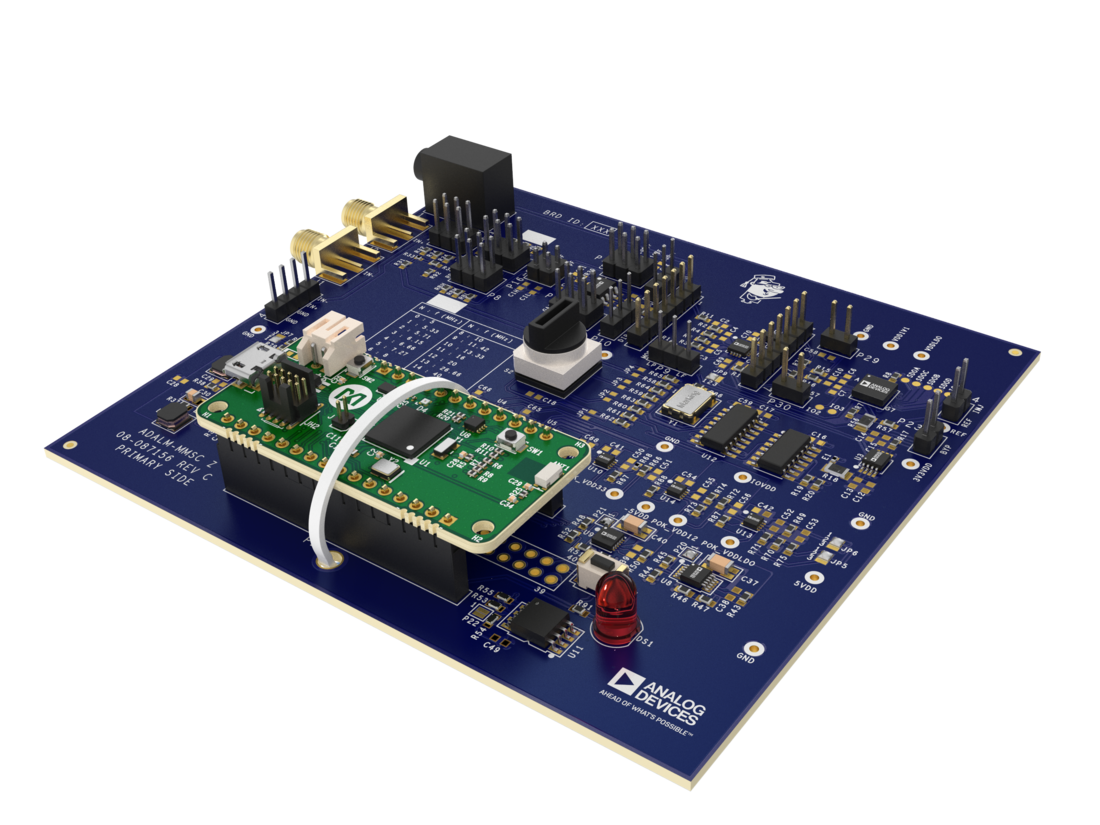
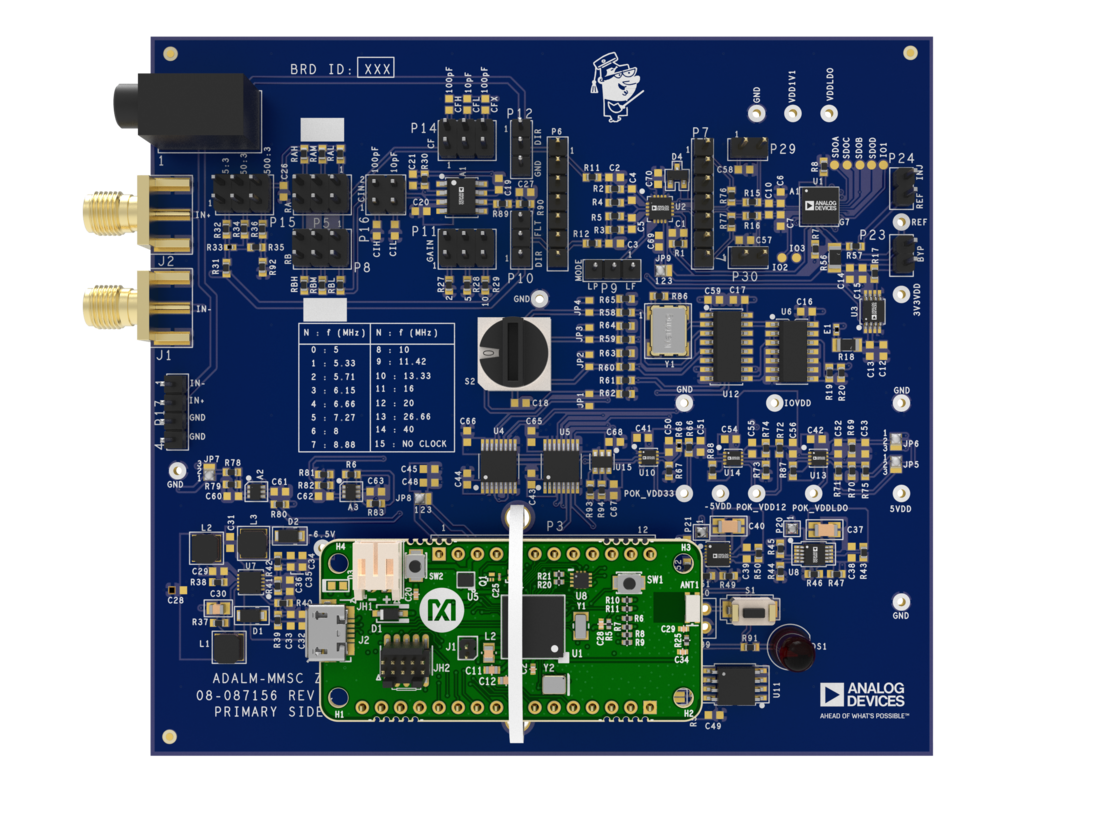

Mixed-Mode Signal Chain Active Learning Module