Benchmarking Industrial Robotic Dexterity

The robotics industry needs a common way to measure and compare robotic dexterity on real-world automation challenges. From cable-harness installation and server assembly to mixed-product packing, these tasks demand adaptability, precision, and reliability that robots have not yet consistently demonstrated. The Industrial Dexterity Benchmark, developed by Analog Devices (ADI) following discussions with industry leaders, provides a free and open-source shared framework for evaluating robotic performance, enabling meaningful comparisons, and accelerating innovation across the industry.
Benchmark Ecosystem






How Will We Know If Robotic Dexterity Is Actually Improving?
Industrial robotic dexterity will not advance through better algorithms, sensors, or hardware alone. It requires a measurable way to evaluate how robotic systems perform in real-world conditions, where perception, motion, contact, AI models, and control must work together reliably.
The key question is not whether a robot can complete a task once in a controlled demonstration. It’s whether the industry is making measurable progress on industrial manipulation challenges that have resisted automation for decades. Answering that question motivated the creation of the Industrial Dexterity Benchmark program at ADI.
Why Benchmarks Are Critical
As robotics shifts from explicitly programmed systems to systems that learn and generalize from data, objective evaluation becomes increasingly important. Without common benchmarks, it is difficult to determine whether a new approach represents genuine reproducible progress or simply performs well in a limited scenario. A shared yardstick enables meaningful comparisons and helps guide progress and innovation.
ADI’s Test Benches
ADI’s Industrial Dexterity Benchmark begins with industrial tasks where automation remains stubbornly limited despite significant commercial value, then offers a common framework for measuring progress. Three test benches were developed:
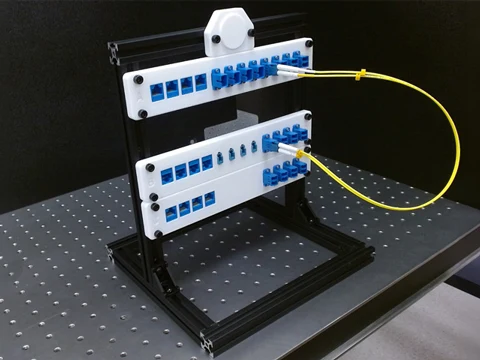
Constrained access, delicate manipulation, and precise connector insertion.
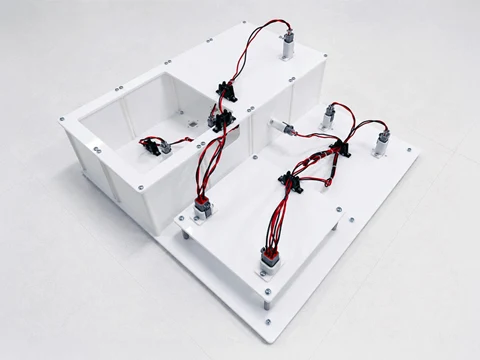
Flexible materials, hidden connectors, and complex routing requirements.
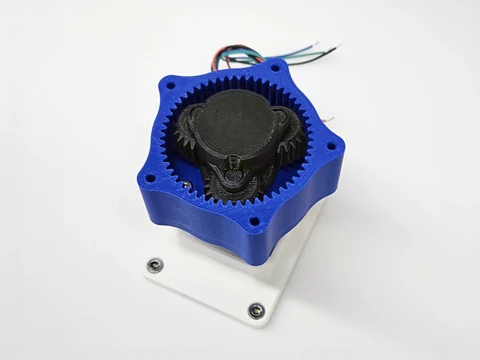
Fine manipulation, sequencing, and precision common in manufacturing and maintenance environments.
How To Get Started
1
Download
The benchmark's specification and fabrication CAD files are available on the benchmark's GitHub Repo.
2
Fabricate
- DIY: To build your own test benches, you will need a 3D printer, a laser cutter, and some basic tools; the build specs are available in common CAD formats, and everything you need is included.
- Get a set: Order a set from our partners at the University of Massachusetts, Lowell's NERVE Center.
3
Solve the Test Benches
4
Share Your Results (Coming Soon)
Head over to robot-manipulation.org and publish your results on our leaderboard.

Partner With Us
Building common tools and a platform is all about partnership. Analog Devices would like to work with other groups and entities interested in supporting, promoting, and evolving this project. As an open-source project, anyone can use or promote the benchmark, but we would still love to learn how you are using it.