

Engineering insights for today’s technical challenges.
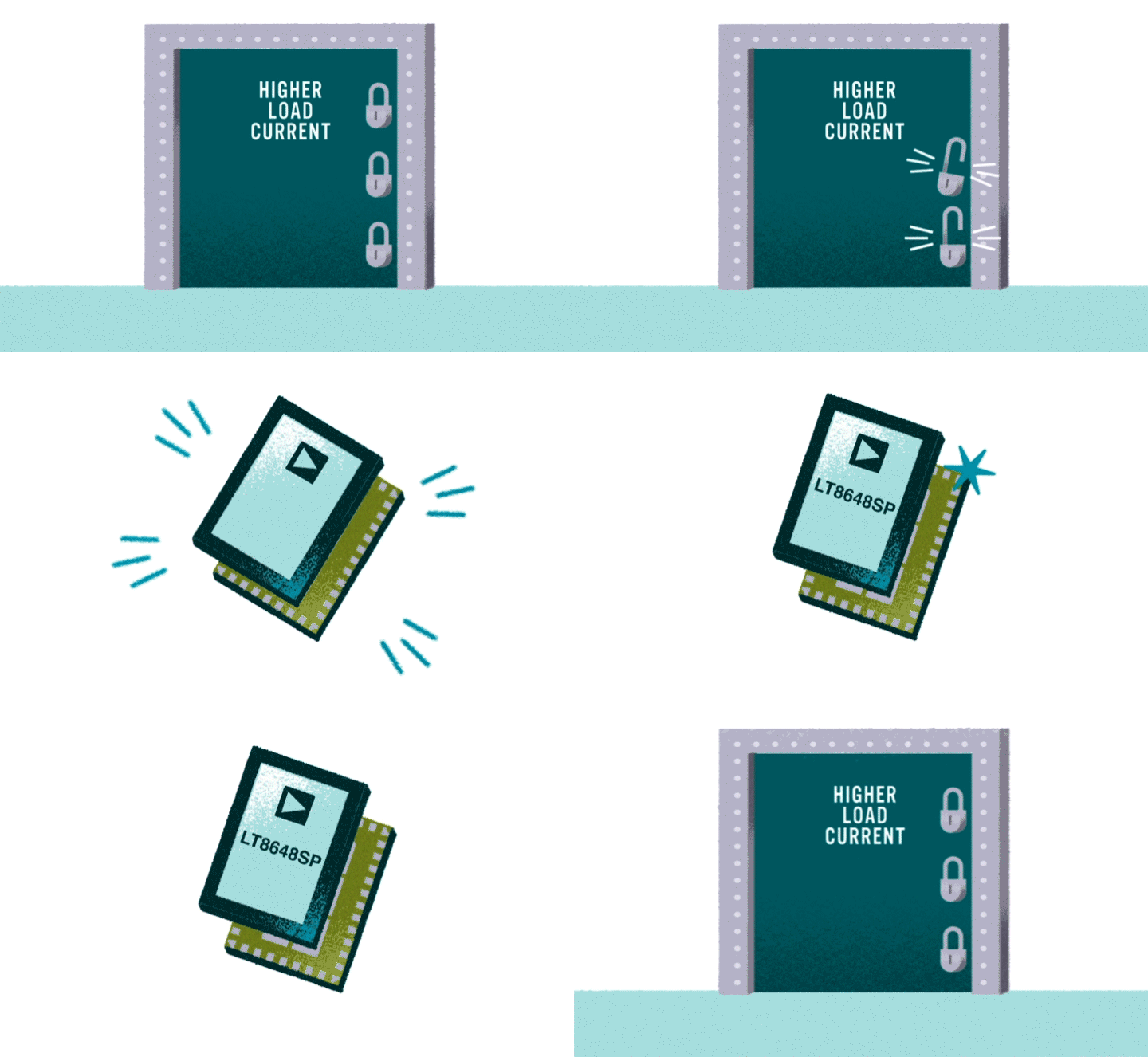
High-Power Monolithic IC for System on a Chip
What is required to increase the load current capability of a monolithic buck regulator?
See the AnswerLatest Technical Articles

When it comes to HDMI isolation, why settle for half a solution? ADI covers the full signal path—from low-speed control lines to high-speed data—so nothing slips through the cracks. And with iCoupler digital isolators built to meet medical- and security-grade safety standards, you're not just isolating signals. You're building trust into every system you ship.

Continuous-time sigma-delta ADCs don't have to be intimidating. This article breaks down their most complex concepts into clear, intuitive terms. Along the way, we walk through real-world industrial applications, from precision measurement to motor control, so you can see exactly how these converters perform under pressure. The goal is simple: help you grasp the fundamentals fast, streamline your circuit design, and make product selection a breeze.

This article pairs market-driven context on why IPCs need interface isolation with calculation-ready tables drawn straight from IEC 60601-1 and IEC 61010-1—so you can determine creepage, clearance, and dielectric withstand without hunting through the standards. Place a single reinforced isolation barrier at the user-accessible interface to protect against high-voltage faults, simplify upstream insulation, and save cost and space. Context that explains why. Tables that show how. An architecture that ties it together.
Engineering Intelligence & Releases

ADI experts share their industry knowledge, talk about what's trending in technology, and shine a spotlight on innovation.

Discover the latest products: sensing, measurement, connectivity, power, and security solutions to solve your toughest design challenges.

Stay updated and leverage Signals+ latest insights, information and ideas on Connectivity, Digital Health, Electrification, and Smart Industry.
