Rarely Asked Questions

Issue 243, February 2026
Don’t Let Your Feedback Loop Fall Flat—Part 1: Bias Your Optocoupler Right!
Question: Why is optocoupler biasing critical in an isolated feedback loop?
VIEW THE ANSWER
Issue 242, January 2026
Accurately Sensing High Currents
Question: Why does the circuit use 150 Ω for R2, and what are the critical trade-offs in selecting this scaling resistor value?
VIEW THE ANSWER
Issue 241, December 2025
Smart GaN Buck Controller Designs—Part 2: Configuration and Optimization
Question: What is the impact of using a 35 ns dead time in RSET mode on the thermal performance of the GaN FETs compared to the smart near-zero dead time mode?
VIEW THE ANSWER![Smart GaN Buck Controller Designs—Part 1: Considerations and Measurements]()
Smart GaN Buck Controller Designs—Part 1: Considerations and Measurements
Issue 240, November 2025
![RAQ2510]()
Secure Connectivity for At-Home Healthcare—Challenges Beyond the Clinic
Issue 239, October 2025
![Simplify On-Board Security Systems and Increase Video Performance with GMSL]()
Simplify On-Board Security Systems and Increase Video Performance with GMSL
Issue 238, September 2025
![How to Convert Voltages Using a High Voltage Buck Controller Without a Transformer]()
How to Convert Voltages Using a High Voltage Buck Controller Without a Transformer
Issue 237, August 2025
![Toward Smarter Digital Predistortion Engines: A Neural Network-Based Approach]()
Toward Smarter Digital Predistortion Engines: A Neural Network-Based Approach
Issue 236, July 2025
![Navigating GMSL: How Pixel and Tunnel Modes Enhance System Performance]()
Navigating GMSL: How Pixel and Tunnel Modes Enhance System Performance
Issue 235, June 2025
![RAQ Issue 234: Integrated SoC Shrinks the Size of the 4-20 mA Smart Transmitter]()
Integrated SoC Shrinks the Size of the 4-20 mA Smart Transmitter
Issue 234, May 2025
![Replacing PhotoMOS Switches in Automatic Test Equipment Applications]()
Replacing PhotoMOS Switches in Automatic Test Equipment Applications
Issue 233, April 2025
![RAQ Issue 232: Boost Converter Combines Silent Switcher Technology and Input Disconnect for Performance and Protection]()
RAQ Issue 232: Boost Converter Combines Silent Switcher Technology and Input Disconnect for Performance and Protection
Issue 232, March 2025
![10BASE-T1L Single-Pair Ethernet Cable Reach and Link Performance]()
10BASE-T1L Single-Pair Ethernet Cable Reach and Link Performance
Issue 231, February 2025
![How the New Discrete Period Transform Method Can Process Physiological Signals]()
How the New Discrete Period Transform Method Can Process Physiological Signals
Issue 230, January 2025
![Enhancing Speed and Effiiency for High Transient Automotive Applications]()
Enhancing Speed and Efficiency for High Transient Automotive Applications
Issue 229, December 2024
![How to Optimize a Second-Order Output Filter for an Ultralow Noise µModule Regulator]()
How to Optimize a Second-Order Output Filter for an Ultralow Noise µModule Regulator
Issue 228, November 2024
![How using an io-link transceiver to manage the data link simplifies microcontroller selection]()
How Using an IO-link Transceiver to Manage the Data Link Simplifies Microcontroller Selection
Issue 227, September 2024
![Improving Industrial Functional Safety Compliance with High Performance Voltage Supervisors—Part 1]()
Improving Industrial Functional Safety Compliance with High Performance Supervisory Circuits—Part 1
Issue 226, August 2024
![Can You Drive GaNFETs with a DC-to-DC Controller Originally Designed for Silicon MOSFETs?]()
Can You Drive GaNFETs with a DC-to-DC Controller Originally Designed for Silicon MOSFETs?
Issue 225, July 2024
![Parasitic Oscillation in Hot Swaps]()
Parasitic Oscillation in Hot Swaps
Issue 224, June 2024
![How to Measure and Determine Soft Start Timing When There Is No Soft Start Equation?]()
How to Measure and Determine Soft Start Timing When There Is No Soft Start Equation?
Issue 223, May 2024
![Analysis of Switch-Mode Power Supply and Rectification: Transistor Timing & Boost Capacitor Issues]()
Analysis of Switch-Mode Power Supply and Rectification: Transistor Timing & Boost Capacitor Issues
Issue 222, April 2024
![Analysis of Switch-Mode Power Supply and Rectification: Sense Resistor Violations]()
Analysis of Switch-Mode Power Supply and Rectification: Sense Resistor Violations
Issue 221, March 2024
![Analysis of Switch-Mode Power Supply and Rectification: Inductor Violations]()
Analysis of Switch-Mode Power Supply and Rectification: Inductor Violations
Issue 220, February 2024
![New Power Supply Concepts Needed for Intelligent Edge Sensors]()
New Power Supply Concepts Needed for Intelligent Edge Sensors
Issue 219, December 2023
![Designing for Optimal Power Conversion Efficiency in Battery-Powered Systems]()
Designing for Optimal Power Conversion Efficiency in Battery-Powered Systems
Issue 218, November 2023
![RAQ Issue 217: Best Methods for Protecting Against Surge Events in Ethernet and Industrial Applications]()
Best Methods for Protecting Against Surge Events in Ethernet and Industrial Applications
Issue 217, October 2023
![How to Protect Your Power System Designs Against Faults]()
How to Protect Your Power System Designs Against Faults
Issue 216, September 2023
![Is There Such a Thing as a True Glitch-Free Voltage Supervisor IC?]()
Is There Such a Thing as a True Glitch-Free Voltage Supervisor IC?
Issue 215, July 2023
![Did You Know Optocouplers Are Not Needed for Isolated DC-to-DC Conversion?]()
Did You Know Optocouplers Are Not Needed for Isolated DC-to-DC Conversion?
Issue 214, June 2023
![Generating Negative Voltages—Why You Need Level Shifting in Buck-Boost Circuits]()
Generating Negative Voltages—Why You Need Level Shifting in Buck-Boost Circuits
Issue 213, May 2023
![Maximize Predictive Maintenance with Careful Selection of MEMS Accelerometers]()
Maximize Predictive Maintenance with Careful Selection of MEMS Accelerometers
Issue 212, April 2023
![Why a Perfectly Stable Switch-Mode Power Supply May Still Oscillate Due to Negative Resistance]()
Why a Perfectly Stable Switch-Mode Power Supply May Still Oscillate Due to Negative Resistance
Issue 211, March 2023
![How to Prototype a Power Bank Charger Without Building Any Dedicated Hardware]()
How to Prototype a Power Bank Charger Without Building Any Dedicated Hardware
Issue 210, February 2023
![How to Combine a Low-Pass Filter and an ADC Driver for a 20 V p-p Signal]()
How to Combine a Low-Pass Filter and an ADC Driver for a 20 V p-p Signal
Issue 209, January 2023
![How to Design a Simple, Uninterruptible Power Supply with Supercapacitors]()
How to Design a Simple, Uninterruptible Power Supply with Supercapacitors
Issue 208, December 2022
![How to Optimize Switching Power Supply Layout by Minimizing Hot Loop PCB ESRs and ESLs]()
How to Optimize Switching Power Supply Layout by Minimizing Hot Loop PCB ESRs and ESLs
Issue 207, November 2022
![How to Leverage the Inverting Buck-Boost Topology in High Voltage Applications]()
How to Leverage the Inverting Buck-Boost Topology in High Voltage Applications
Issue 206, October 2022
![How Do You Amplify AC Signals with Large DC Offsets Using an Indirect Current-Mode In-Amp?]()
How Do You Amplify AC Signals with Large DC Offsets Using an Indirect Current-Mode In-Amp?
Issue 205, September 2022
![RF Demystified—What Is an RF Attenuator?]()
RF Demystified—What Is an RF Attenuator?
Issue 204, August 2022
![How to Build an Uninterruptible Power Supply for Home Devices]()
How to Build an Uninterruptible Power Supply for Home Devices
Issue 203, July 2022
![RF Demystified: Scattering Parameters and Their Types]()
RF Demystified: S-Parameters and Their Types
Issue 202, June 2022
![While measuring op amp input capacitance, what should I focus on?]()
How to Measure Op Amp Input Capacitance to Minimize Noise
Issue 201, May 2022
![RAQ Issue 200: Practical Tips for Measuring Ultralow Bias Current Using Commercial-Grade Lab Equipment]()
Practical Tips for Measuring Ultralow Bias Current Using Commercial-Grade Lab Equipment
Issue 200, April 2022
![RAQ Issue 199: Three Compact Solutions for High Step-Down Voltage Ratios]()
Three Compact Solutions for High Step-Down Voltage Ratios
Issue 199, March 2022
![RAQ Issue 198: Why AMR Sensors Are a Great Option for High Precision Position Measurements!]()
Why AMR Sensors Are a Great Option for High Precision Position Measurements!
Issue 198, February 2022
![RAQ Issue 197: RF Demystified—Understanding Wave Reflections]()
RF Demystified—Understanding Wave Reflections
Issue 197, January 2022
![RAQ Issue 196: How to Easily Select the Right Frequency Generation Component]()
How to Easily Select the Right Frequency Generation Component
Issue 196, December 2021
![RAQ Issue: 195]()
A Guide for Choosing the Right RF Amplifier for Your Application
Issue 195, November 2021
![RAQ Issue 194]()
A New, Better Way to Optimize a Signal Chain with a Continuous-Time Sigma-Delta Converter
Issue 194, October 2021
![raq-issue-193-anim]()
Three Options to Optimize the Control Loop of Power Converters
Issue 193, September 2021
![RAQ Issue: 192]()
How to Use LTspice Simulations to Account for the Effect of Voltage Dependence
Issue 192, August 2021
![raq-issue-191-anim]()
Point-of-Load DC-to-DC Converters Solve Voltage Accuracy, Efficiency, and Latency Issues
Issue 191, July 2021
![RAQ Issue 190]()
Adjustable, High Voltage Supply Combines Precision and Repeatability for Sensor Bias Applications
Issue 190, June 2021
![RAQ 189]()
Isolation for SAR ADCs
Issue 189, May 2021
![RAQ Issue: 188]()
Mitigation Strategies for Tricky FM Band Conducted EMI
Issue 188, April 2021
![RAQ Issue: 187]()
How to Choose the Right Protection for Your Circuit
Issue 187, March 2021
![RAQ Issue: 186]()
Adding a Flexible Current Limit
Issue 186, February 2021
![RAQ Issue: 185]()
The Perilous Path from the Transducer to the ADC: What’s an Engineer to Do?
Issue 185, January 2021
![RAQ Issue: 184]()
How a 16-Bit Output Module with Voltage and Current Outputs Can Be Controlled with Full Isolation from the Microcontroller
Issue 184, December 2020
![RAQ Issue: 183]()
Voltage Conversion in Four Quadrants
Issue 183, November 2020
![RAQ Issue: 182]()
Keeping EMI from LED Drivers Under Control
Issue 182, October 2020
![RAQ Issue: 181]()
Generating Very Low Voltages with Standard Regulators
Issue 181, September 2020
![RAQ: Issue 180]()
Design of an Adjustable Voltage Output Using a Push-Button Digital Potentiometer
Issue 180, August 2020
![RAQ Issue: 179]()
Energy Storage Using Supercapacitors: How Big Is Big Enough?
Issue 179, July 2020
![RAQ Issue: 178]()
Wide Voltage Range Automotive Circuit Protector
Issue 178, June 2020
![RAQ Issue: 177]()
RMS Power vs. Average Power
Issue 177, May 2020
![RAQ Issue: 176]()
Ultralow Noise, 48 V, Phantom Microphone Power Supply Using a Tiny DC-to-DC Boost Converter
Issue 176, April 2020
![RAQ Issue: 175]()
LTspice Audio WAV Files: Using Stereo and Encrypting Voice Messages
Issue 175, March 2020
![RAQ Issue: 174]()
Current Noise in FET Input Amps
Issue 174, February 2020
![RAQ Issue: 173]()
On Building Physically Accurate Analog Switch Macromodels
Issue 173, January 2020
![RAQ Issue: 172]()
Manipulating MCU SPI Interface to Access a Nonstandard SPI ADC
Issue 172, December 2019
![RAQ Issue: 171]()
“If It Isn’t Broken, Don’t Fix It.” Adjusting the Gain of a Fixed-Gain Difference Amplifier
Issue 171, November 2019
![RAQ Issue: 170]()
Inductor Current Measurement in Switched Power Supplies
Issue 170, October 2019
![RAQ Issue: 169]()
A Simple Way to Measure Temperature Using One GPIO Digital Interface
Issue 169, September 2019
![RAQ Issue: 168]()
Bootstrapping a Low Voltage Op Amp to Operate with High Voltage Signals and Supplies
Issue 168, August 2019
![RAQ Issue: 167]()
When Smaller Is Better
Issue 167, July 2019
![RAQ Issue: 166]()
How to Convert Light Intensity Into an Electrical Quantity
Issue 166, June 2019
![RAQ Issue: 165]()
Discrete Difference Amplifier vs. an Integrated Solution
Issue 165, May 2019
![RAQ Issue: 164]()
Guidelines for Placing the Inductor on a Switch Mode Power Supply Printed Circuit Board
Issue 164, April 2019
![RAQ Issue: 163]()
SAR Converter with PGA Achieves Dynamic Range of 125 dB
Issue 163, March 2019
![RAQ Issue: 162]()
Enablement of Batteryless Applications with Wireless Power
Issue 162, February 2019
![RAQ Issue: 161]()
A New Spin on a Classic Architecture: Achieving a Fully Differential Output Using Single-Ended Instrumentation Amplifiers
Issue 161, January 2019
![RAQ Issue: 160]()
Simple Circuit Measures Relative Intensity of Two Light Sources
Issue 160, December 2018
![RAQ Issue: 159]()
When Grounds Are Separated
Issue 159, November 2018
![RAQ Issue: 158]()
Driving a Unipolar Gate Driver in a Bipolar Way
Issue 158, October 2018
![RAQ Issue: 157]()
Overvoltage Protection for RTD-Based Measurement Systems
Issue 157, September 2018
![RAQ Issue: 156]()
Optimized Power Supply Measurement Setup
Issue 156, August 2018
![RAQ Issue: 155]()
Home on the Range: Getting Multiple Gain Ranges With Instrumentation Amplifiers
Issue 155, July 2018
![RAQ Issue: 154]()
Pocket-Size White Noise Generator for Quickly Testing Circuit Signal Response
Issue 154, June 2018
![RAQ Issue: 153]()
High Speed ADC Power Supply Domains
Issue 153, May 2018
![RAQ Issue: 152]()
Problem Solver: Multiplying Digital-to-Analog Converter
Issue 152, April 2018
![RAQ Issue: 151]()
High-Side Current Sensing
Issue 151, March 2018
![RAQ: Issue 150]()
Dynamic Use of the Disable Pin on an Amplifier
Issue 150, February 2018
![RAQ: Issue 149]()
Intermediate Voltage to Increase Power Conversion Efficiency
Issue 149, January 2018
![RAQ: Issue 148]()
Unique Gate Drive Applications Enable Rapidly Switching On/Off for Your High Power Amplifier
Issue 148, December 2017
![RAQ: Issue 147]()
Synchronous Rectification on the Secondary Side
Issue 147, November 2017
![raq-issue-146]()
Why Is My Processor Leaking Power? That Sounds Like an Open-Ended Question
Issue 146, October 2017
![RAQ: Issue 145]()
A Low Power, Low Cost, Differential Input to a Single-Ended Output Amplifier
Issue 145, September 2017
![RAQ: Issue 144]()
Accelerometer Tilt Measure Over Temperature and in the Presence of Vibration
Issue 144, August 2017
![RAQ: Issue 143]()
Burned by Low Power? When Lower Current Consumption Can Get You Into Trouble
Issue 143, July 2017
![RAQ: Issue 142]()
Orthogonal Perspectives
Issue 142, June 2017
![RAQ: Issue 141]()
Sometimes, a Signal Needs to Ride the Rails
Issue 141, May 2017
![RAQ: Issue 139]()
Presto! Multiply Your ADC’s Virtual Channel Count with DDC Magic
Issue 140, April 2017
![RAQ:Issue 139]()
The Case of the Misguided Gyro
Issue 139, March 2017
![RAQ: Issue 138]()
This Noise Will Keep You Up at Night
Issue 138, February 2017
![RAQ: 137]()
Psychotic ADC?
Issue 137, January 2017
![RAQ: Issue 136]()
Precision Current Outputs Are Easy to Make
Issue 136, December 2016
![RAQ: Issue 135]()
Amplifier RF: Think Before you Choose!
Issue 135, November 2016
![RAQ: Issue 134]()
Because Mr. Ohm Said So …
Issue 134, October 2016
![RAQ: Issue 133]()
Common Sense for Current Sensing
Issue 133, September 2016
![RAQ: Issue 132]()
Choosing a Precision Op Amp? Trust Goldilocks.
Issue 132, August 2016
![RAQ: Issue 131]()
Going Full Tilt
Issue 131, July 2016
![RAQ: Issue 130]()
Who Killed the Component?
Issue 130, June 2016
![RAQ: Issue 129]()
Who Ate My dBs?
Issue 129, May 2016
![RAQ: Issue 128]()
Citius, Altius, Fortius
Issue 128, April 2016
![RAQ: Issue 127]()
Kalman or FIR Filter for My IMU?
Issue 127, March 2016
![RAQ: Issue 126]()
When Second Sources Aren't
Issue 126, February 2016
![RAQ: Issue 125]()
O CMRR, CMRR! Wherefore Art Thou CMRR?
Issue 125, January 2016
![RAQ: Issue 124]()
Missing Half the Signal
Issue 124, December 2015
![RAQ: Issue 123]()
Unused Pins
Issue 123, November 2015
![RAQ: Issue 122]()
The Truth About Voltage Feedback Resistors
Issue 122, October 2015
![RAQ: Issue 121]()
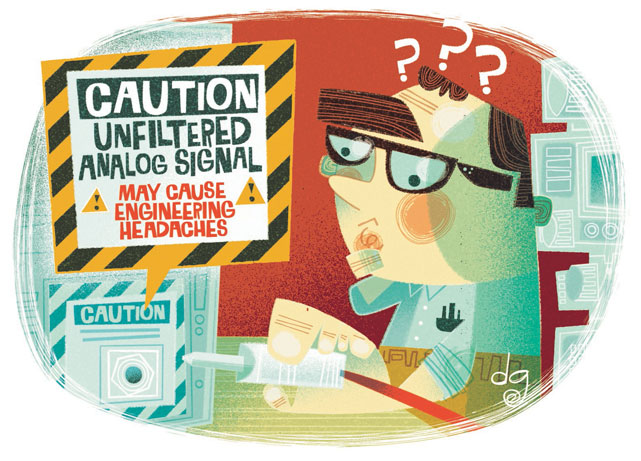
Unfiltered Analog
Issue 121, September 2015
![RAQ: Issue 120]()
Voltage References Can Bite You, Too
Issue 120, August 2015
![RAQ: Issue 119]()
The Ingenious Gentleman and the Mysterious Paddle
Issue 119, July 2015
![RAQ: Issue 118]()
Mystery Spur Explained: Don't Blame the DDC!
Issue 118, June 2015
![RAQ: Issue 117]()
Murphy Rules!
Issue 117, May 2015
![RAQ: Issue 116]()
Muntzing can save cost, components, and even your sanity
Issue 116, April 2015
![RAQ: Issue 115]()
Isn’t that gain specification a bit lopsided?
Issue 115, March 2015
![RAQ: Issue 114]()
Choosing Voltage References
Issue 114, February 2015
![RAQ: Issue 113]()
Don’t Get Caught Speeding
Issue 113, January 2015
![RAQ: Issue 112]()
Exposed Paddles and Downbonds Improve Performance and Reduce Pin Count
Issue 112, December 2014
![RAQ: Issue 111]()
Choosing Analog ICs
Issue 111, November 2014
![RAQ: Issue 110]()
I Grew Up in the 80s and Survived!
Issue 110, October 2014
![RAQ: Issue 109]()
ADCs for High Dynamic Range – Successive-Approximation or Sigma-Delta?
Issue 109, September 2014
![RAQ: Issue 108]()
LEDs are Photodiodes Too
Issue 108, August 2014
![RAQ: Issue 107]()
The Diamond Plot
Issue 107, July 2014
![RAQ: Issue 106]()
Overranged Converter Recovers Quickly
Issue 106, June 2014
![RAQ: Issue 105]()
Discretion is the better part…
Issue 105, May 2014
![RAQ: Issue 104]()
Looking for Trouble in All the Wrong Places
Issue 104, April 2014
![RAQ: Issue 103]()
Programmable ADC Input Range Provides System Benefits
Issue 103, March 2014
![RAQ: Issue 102]()
Defying Scrooge
Issue 102, February 2014
![RAQ: Issue 101]()
Bits Per Second Make My Head Hertz
Issue 101, January 2014
![RAQ: Issue 100]()
RAQs: 100 Issues and Counting
Issue 100, December 2013
![RAQ: Issue 99]()
Overrange Flag Indicates Data Validity
Issue 99, November 2013
![RAQ: Issue 98]()
Design Tools and Support Communities Make Analog Fun, not Fearful
Issue 98, October 2013
![RAQ: Issue 97]()
EngineerZone Makes Getting Answers a Breeze
Issue 97, September 2013
![RAQ: Issue 96]()
Soft Clipping vs. Hard Clipping
Issue 96, August 2013
![RAQ: Issue 95]()
Do-it-Yourself ASICs
Issue 95, July 2013
![RAQ: Issue 94]()
Crystal Radio Sets and Op Amps—Both Can Detect RF Signals
Issue 94, June 2013
![RAQ: Issue 93]()
Input Magic—Differential Signals Allow Input Swing to Exceed Supply Voltage
Issue 93, May 2013
![RAQ: Issue 92]()
Multipliers and Modulators
Issue 92, April 2013
![RAQ: Issue 91]()
Noise Gain vs. Signal Gain
Issue 91, March 2013
![RAQ: Issue 90]()
Resolution vs. ENOB – Still Hazy After All These Years
Issue 90, February 2013
![RAQ: Issue 89]()
Electronics is Fun
Issue 89, January 2013
![RAQ: Issue 88]()
The Decline of Rounding—or How Significant is Significance?
Issue 88, December 2012
![raq-issue-87]()
Apples and Oranges—Correlating Specifications Requires Common Test Conditions
Issue 87, November 2012
![raq-issue-86]()
Current Transformers—and Vacuum Cleaners
Issue 86, October 2012
![raq-issue-85]()
Great Expectations Come From Basic Understandings
Issue 85, September 2012
![raq-issue-84]()
Driving Miss ADC
Issue 84, August 2012
![raq-issue-83]()
Dual Op Amps and Double Agents
Issue 83, July 2012
![raq-issue-82]()
Transformers: They’re Not All Boat Anchors
Issue 82, June 2012
![raq-issue-81]()
Switching Bits
Issue 81, May 2012
![raq-issue-80]()
The Electromotive Force and Op Amps
Issue 80, April 2012
![RAQ: Issue 79]()
Nobody is Perfect – Not Even an Engineer!
Issue 79, March 2012
![RAQ: Issue 78]()
Considerations on High-Speed Converter PCB Design, Part 4: Plane Coupling
Issue 78, February 2012
![RAQ: Issue 77]()
Beware of big claims and large numbers.
Issue 77, January 2012
![RAQ: Issue 76]()
In and Out – or – Why Have a Capacitor?
Issue 76, December 2011
![RAQ: Issue 75]()
Crosstalkin’ Converters
Issue 75, November 2011
![RAQ: Issue 74]()
Rotary Potentiometers: There Must Be a Better Option
Issue 74, October 2011
![RAQ: Issue 73]()
The Benefits of Ancient Logic
Issue 73, September 2011
![RAQ: Issue 72]()
Balancing Phase in High-Speed Converters
Issue 72, August 2011
![RAQ: Issue 71]()
Looking for savings in all the wrong places
Issue 71, July 2011
![RAQ: Issue 70]()
Do Something with that Unused Pin!
Issue 70, June 2011
![RAQ: Issue 69]()
Considerations on High-Speed Converter PCB Design, Part 3: The E-Pad Low Down
Issue 69, May 2011
![RAQ: Issue 68]()
A Foolish Question about Op Amps and Capacitors
Issue 68, April 2011
![RAQ: Issue 67]()
Measuring the DC Parameters of Op Amps
Issue 67, March 2011
![RAQ: Issue 66]()
Considerations on High-Speed Converter PCB Design, Part 2: Power and Ground Planes.
Issue 66, February 2011
![RAQ: Issue 65]()
Op Amp Dedicated Feedback Pin Helps Achieve New Levels of Performance.
Issue 65, January 2011
![RAQ: Issue 64]()
Oversampling and Undersampling
Issue 64, December 2010
![RAQ: Issue 63]()
Considerations on High-Speed Converter PCB Design, Part 1: Power and Ground Planes.
Issue 63, November 2010
![RAQ: Issue 62]()
Is amplifier headroom cramping your style?
Issue 62, October 2010
![RAQ: Issue 61]()
Make do!
Issue 61, September 2010
![RAQ: Issue 60]()
Watch for Those Multiple Clocking Edges!
Issue 60, August 2010
![RAQ: Issue 59]()
Is Your Amplifier Disabled, or is it Merely Sleeping?
Issue 59, July 2010
![RAQ: Issue 58]()
How to Avoid Burning Cakes
Issue 58, June 2010
![RAQ: Issue 57]()
Keeping Your A/D Converter Clocks Jitter Free
Issue 57, May 2010
![RAQ: Issue 56]()
Amplifier, attenuator or both?
Issue 56, April 2010
![RAQ: Issue 55]()
Taming A/D Converter Power Supplies
Issue 55, March 2010
![RAQ: Issue 54]()
Don’t be Mean - be Root Mean Square!
Issue 54, February 2010
![RAQ: Issue 53]()
VFB or CFB that is the question!
Issue 53, January 2010
![RAQ: Issue 52]()
Bring on the Converter Noise! – Part 2
Issue 52, December 2009
![RAQ: Issue 51]()
Bring on the Converter Noise! – Part 1
Issue 51, November 2009
![RAQ: Issue 50]()
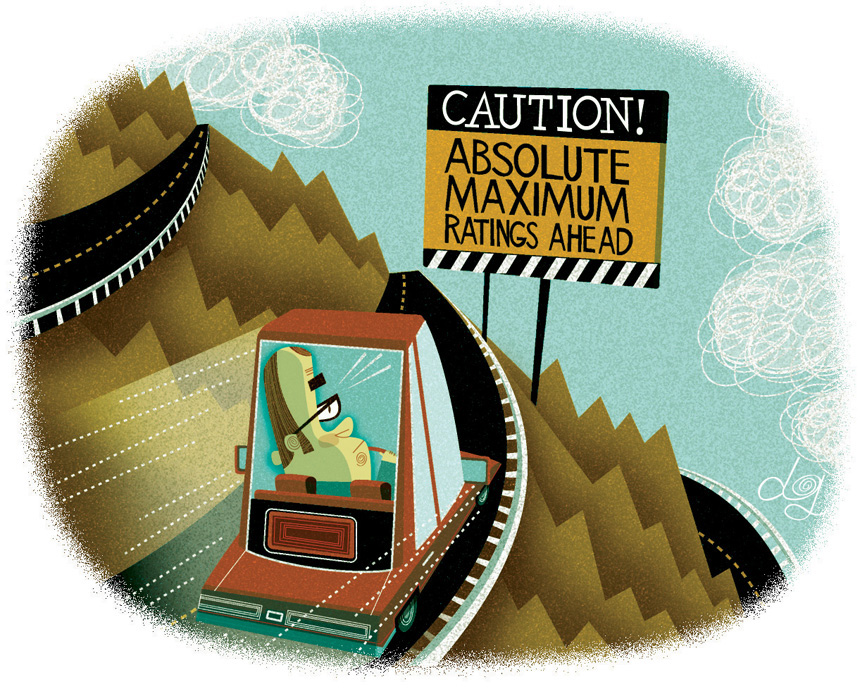
What’s the big deal about ABSOLUTE MAXIMUM RATINGS?
Issue 50, October 2009
![RAQ: Issue 49]()
What’s the (Converter) Frequency Kenneth?
Issue 49, September 2009
![RAQ: Issue 48]()
Some Chips Have Moving Parts!
Issue 48, August 2009
![RAQ: Issue 47]()
Which carries more weight, a datasheet or SPICE macromodel?
Issue 47, July 2009
![RAQ: Issue 46]()
What shall we do with an unused op-amp?
Issue 46, June 2009
![RAQ: Issue 45]()
Glass Diodes May See the Light — and Hum
Issue 45, May 2009
![RAQ: Issue 44]()
Keeping Common Modes Common
Issue 44, April 2009
![RAQ: Issue 43]()
Impedance Measuring Chip Offers Little Resistance to Applications
Issue 43, March 2009
![RAQ: Issue 42]()
Are Your Filters Filtering?
Issue 42, February 2009
![RAQ: Issue 41]()
What’s in Your Toolbox?
Issue 41, January 2009
![RAQ: Issue 40]()
How Big Is It?
Issue 40, December 2008
![RAQ: Issue 39]()
What The Heck Are Off-Amps?
Issue 39, November 2008
![RAQ: Issue 38]()
Single Supply Amplifiers—They Sound Simple…are they?
Issue 38, October 2008
![RAQ: Issue 37]()
Lock Down That Noise — Don’t Let It Escape
Issue 37, September 2008
![RAQ: Issue 36]()
The Difference Between Different Differential Amplifiers
Issue 36, August 2008
![RAQ: Issue 35]()
Stress Is Bad For You — and For Analog ICs
Issue 35, July 2008
![RAQ: Issue 34]()
A Capaciticectomy? Sounds Awfully Painful!
Issue 34, June 2008
![RAQ: Issue 33]()
Hysteresis Blocks Magic
Issue 33, May 2008
![RAQ: Issue 31]()
Too Hot or Too Cold May Be Just Right*
Issue 31, March 2008
![RAQ: Issue 30]()
Capacitive Sensors: Rugged Enough for the Real World?
Issue 30, February 2008
![RAQ: Issue 29]()
Half Full or Half Empty? Thoughts on Capacity.
Issue 29, January 2008
![RAQ: Issue 28]()
What's Your Amplifier's Febricity Due to Electricity?
Issue 28, December 2007
![RAQ: Issue 27]()
Resistors Have Hidden Depths
Issue 27, November 2007
![RAQ: Issue 26]()
Op-Amp Noise can be Deafening Too
Issue 26, October 2007
![RAQ: Issue 25]()
Resistor Noise can be Deafening, and Hard to Reduce
Issue 25, September 2007
![RAQ: Issue 24]()
Are leaky amps sinking your design?
Issue 24, August 2007
![RAQ: Issue 23]()
Should you butcher your circuit or your test gear?
Issue 23, June 2007
![RAQ: Issue 22]()
Things (animals and ADCs) are not always what they seem
Issue 22, May 2007
![RAQ: Issue 21]()
Breadboarding With Surface Mount ICs
Issue 21, April 2007
![RAQ: Issue 20]()
Igor, pass me some supply sequencers!
Issue 20, March 2007
![RAQ: Issue 19]()
Observing Maximum Ratings or How to Avoid Forecasts of Doom
Issue 19, February 2007
![RAQ: Issue 18]()
Just How Accurate was William Tell, Anyway?
Issue 18, January 2007
![RAQ: Issue 17]()
More Chips are Better than One (or the Benefits of Belgian Food)
Issue 17, December 2006
![RAQ: Issue 16]()
Replacing Optocouplers with Digital Isolators
Issue 16, November 2006
![RAQ: Issue 15]()
How to Age Gracefully and Avoid Sudden Death
Issue 15, October 2006
![RAQ: Issue 14]()
Why Good Engineers Use the Best Components
Issue 14, September 2006
![RAQ: Issue 13]()
Sigma Delta Converters are Not Really Hard to Understand
Issue 13, July 2006
![RAQ: Issue 12]()
How Not to Design Active Filters
Issue 12, June 2006
![RAQ: Issue 11]()
Comparators & Op Amps—May They Never Meet
Issue 11, May 2006
![RAQ: Issue 10]()
Digital Processing Does Not Always Rule
Issue 10, April 2006
![RAQ: Issue 9]()
Grounding Converters
Issue 9, March 2006
![RAQ: Issue 8]()
Happy Groundhog Day!
Issue 8, February 2006
![RAQ: Issue 7]()
It’s easy to drive an EE to drink—but what drives one to poetry?
Issue 7, January 2006
![RAQ: Issue 6]()
Tick-Tock, Tick-Tock
Issue 6, December 2005
![RAQ: Issue 5]()
Check the Bias Current
Issue 5, November 2005
![RAQ: Issue 4]()
Caveat Emptor!
Issue 4, October 2005
![RAQ: Issue 3]()
Isolating the Key Detail
Issue 3, September 2005
![RAQ: Issue 2]()
Slow “starting” ADCs
Issue 2, July 2005
![RAQ: Issue 1]()
Radio Frequency Interference (or how to get a free lunch at a very good restaurant)
Issue 1, June 2005